

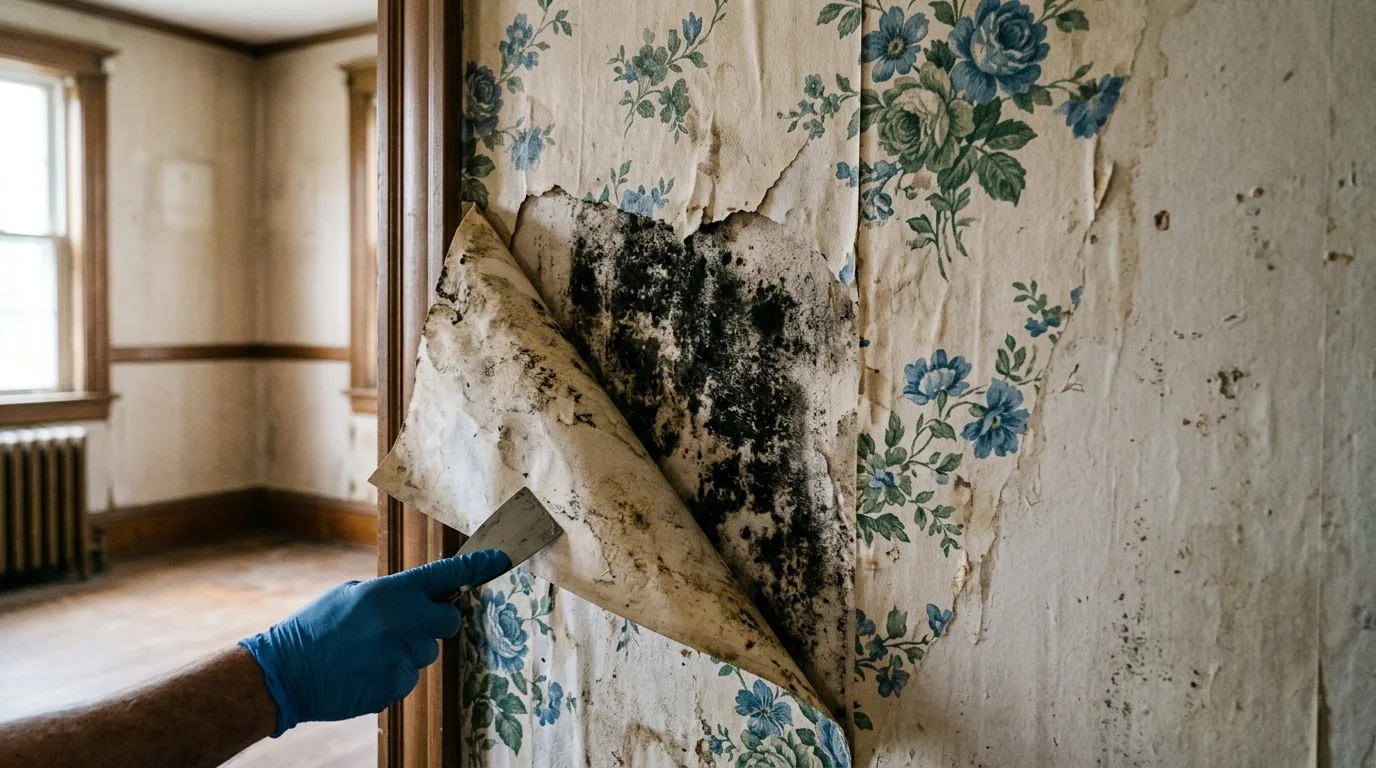
Why Mold Under Wallpaper Is Dangerous
Mold releases spores and toxins into the air that can trigger allergic reactions, asthma attacks, and chronic respiratory illnesses. Black mold is particularly hazardous — it can provoke headaches, skin conditions (dermatitis, eczema), and even weaken the immune system over time. Its presence in the home worsens the state of anyone with chronic health problems.
There are several types of mold you may encounter on walls:
- Green mold — the most common variety, relatively safe if removed promptly.
- Dark green mold — more stubborn, but still manageable if caught early.
- White mold — dangerous because it spreads unnoticed; requires gloves and a respirator when handling.
- Black mold — the most hazardous kind, causes serious immune disruption and spreads rapidly.
Mold also eats into plaster and ruins wallpaper, which leads to expensive repairs down the line. If you do not act in time, the fungus spreads quickly, penetrating deep into building materials. In Spring Valley, where humidity can climb during certain months, homes with poor airflow are at particular risk. That risk extends to homes in neighboring Lemon Grove.
If any type of mold on walls, wallpaper, or ceilings covers more than 20 percent of the total surface area, the dwelling is considered unfit and hazardous for people and pets by sanitary standards. At that point, a full renovation is the only real option.
How Mold Under Wallpaper Looks
Often it goes unnoticed until the walls are seriously affected. The first alarming signal is usually a characteristic musty smell, especially noticeable after you have been away from the room for a while. Blurry spots of gray, black, or greenish tones may appear on the walls.
Visually, mold shows itself in more ways than just spots. Wallpaper may bulge in places, forming small bubbles, or peel along the edges. In the corners of a room and behind furniture, a damp film sometimes appears. Black mold looks especially grim — it forms dense dark clusters that resemble soot.
If you peel back a piece of wallpaper and find loose, crumbling plaster with dark streaks underneath, that is a sure sign of a serious fungal problem. Do not ignore it. The sooner you catch it, the cheaper and faster it is to fix.
Main Causes of Mold Growth
The root cause is elevated humidity combined with poor ventilation. Mold typically develops when indoor humidity stays above 60 percent for an extended period. In corner rooms or on ground floors the problem gets worse because of wall freezing in winter. Vinyl replacement windows without ventilation openings create a thermos effect, and poorly executed renovation work — such as hanging wallpaper on damp walls or skipping the antiseptic primer — only helps the fungus along.
Specific factors that contribute to mold growth:
- Living on the ground floor with a damp or occasionally flooded crawl space below.
- Top-floor units where the roof leaks.
- Poor waterproofing of exterior walls and panel joints.
- Residual moisture left over after renovation work.
- Insufficient bathroom ventilation.
- Frequent indoor laundry drying.
- Too many houseplants with frequent watering in a small room.
- Cooking without a range hood running.
- Furniture pushed flush against walls, blocking air circulation.
- Use of non-breathable wall finishes during remodeling.
In Spring Valley homes — especially older construction — several of these factors often combine. A neighbor's plumbing leak through the ceiling can also saturate the walls enough to trigger mold under wallpaper within weeks.
Getting Rid of Mold Under Wallpaper: Step by Step
The problem is serious but solvable. First, you need to completely remove the damaged wallpaper along with the sections around the visible spots. The wall must be thoroughly cleaned of fungus with a stiff brush, and if the damage is severe — with a metal scraper or putty knife.
Paper wallpaper
Dry the affected areas using a construction heat gun or even a hot iron. Once the paper is dry, remove the mold with a brush. Only the dry method works here — moisture will ruin paper wallpaper. If the wallpaper has peeled off, clean the wall underneath and patch the area with new material in a matching pattern.
Vinyl, acrylic, or washable wallpaper
These materials have higher moisture resistance and are harder to wear through, but they tolerate heat poorly. If mold has formed on them, remove it with a brush or scraper. Then clean the surface using a specialized antifungal product rated for delicate surfaces.
Treating the wall after wallpaper removal
For a reliable result, treat the cleaned surface with a dedicated antiseptic. Apply it in two coats with a gap of four to six hours between them. The wall must dry completely — give it at least 24 hours. Then prime the surface with an antifungal primer before applying any filler. Once the primer has dried, fill in uneven spots with spackle. If needed, apply a waterproofing layer on top. This layered approach is what gives a lasting result. It works the same way on mold under wallpaper in La Mesa homes.
Removing Mold with Common Household Products
If the affected area is small, you can try dealing with it using products you likely already have at home. Whichever method you choose, test it on a small hidden area of the wallpaper first — this precaution can save you from a costly redo.
- Baking soda. Dissolve one teaspoon in a glass of warm water. Apply with a soft sponge. The wall does not need rinsing afterward, and the effect lasts.
- White vinegar. Soak a rag or spray directly from a bottle onto the moldy spot. The mild acid kills many types of mold. Wait an hour, wipe with water, and air out the room.
- Hydrogen peroxide. An antifungal agent with no strong smell — a good choice for households with allergy sufferers or pets. Be careful: it has a bleaching effect and may discolor some wallpaper.
- Ammonia (diluted). Mix half and half with water. Works better on non-porous surfaces like tile, glass, or finished wood than on paper wallpaper.
- Chlorine bleach (or products like it). Dilute 1 part bleach to 10 parts water. Use only if you are sure the wallpaper can handle it and the fumes will not bother anyone in the house. Clean the area with a sponge, then wash with soap and water.
- Copper sulfate solution. Dissolve 50 grams in 5 liters of water, apply to the wall, and let it dry. Repeat if necessary.
All work should be done wearing rubber gloves and a respirator. Mold can absorb through the skin, so bare-handed contact is not safe.
Keeping Mold from Coming Back
Removing the visible mold is only half the job. Unless you fix the underlying conditions, the fungus will return. Preventive steps that actually help:
- Keep indoor humidity between 40 and 50 percent. A basic hygrometer from a hardware store will let you monitor it.
- Air out the house regularly. Improve the ventilation system if the existing one is not pulling its weight.
- Run the range hood every time you cook.
- Install a trickle vent or an air-intake valve on windows to prevent condensation on the glass and frames.
- Coat window sills and reveals with a water-repellent paint.
- Leave a gap of two to three inches between furniture and exterior walls so air can circulate behind it.
- At the first sign of water seeping in from outside, deal with it immediately — in Spring Valley, even a small roof or siding leak can feed a mold colony behind wallpaper for months before you notice.
Treating walls with antifungal products before hanging new wallpaper goes a long way toward preventing the problem from recurring.
When to Call a Professional
If the affected area is larger than about ten square feet, or if the mold keeps coming back after you have cleaned it, it is time to bring in a specialist. Professional crews can run thermal-imaging diagnostics to find hidden moisture pockets, perform atmospheric drying, do injection-based waterproofing, and apply pressurized antiseptic treatments that penetrate deeper than anything you can do by hand.
Professional help is also the right call when anyone in the household has chronic respiratory issues, when load-bearing structures are affected, or when you simply cannot identify and eliminate the moisture source on your own. Fighting mold under wallpaper takes a layered approach — it is not enough to scrub off what you can see. You have to remove the cause. Prevention is always simpler and cheaper than dealing with the consequences, so check the trouble spots regularly, maintain the right humidity level, and use quality materials when you renovate.
Once the wallpaper comes down and the plaster behind it is soft or streaked, the job belongs to mold remediation in Spring Valley. For homes farther south, see mold remediation in Chula Vista.