

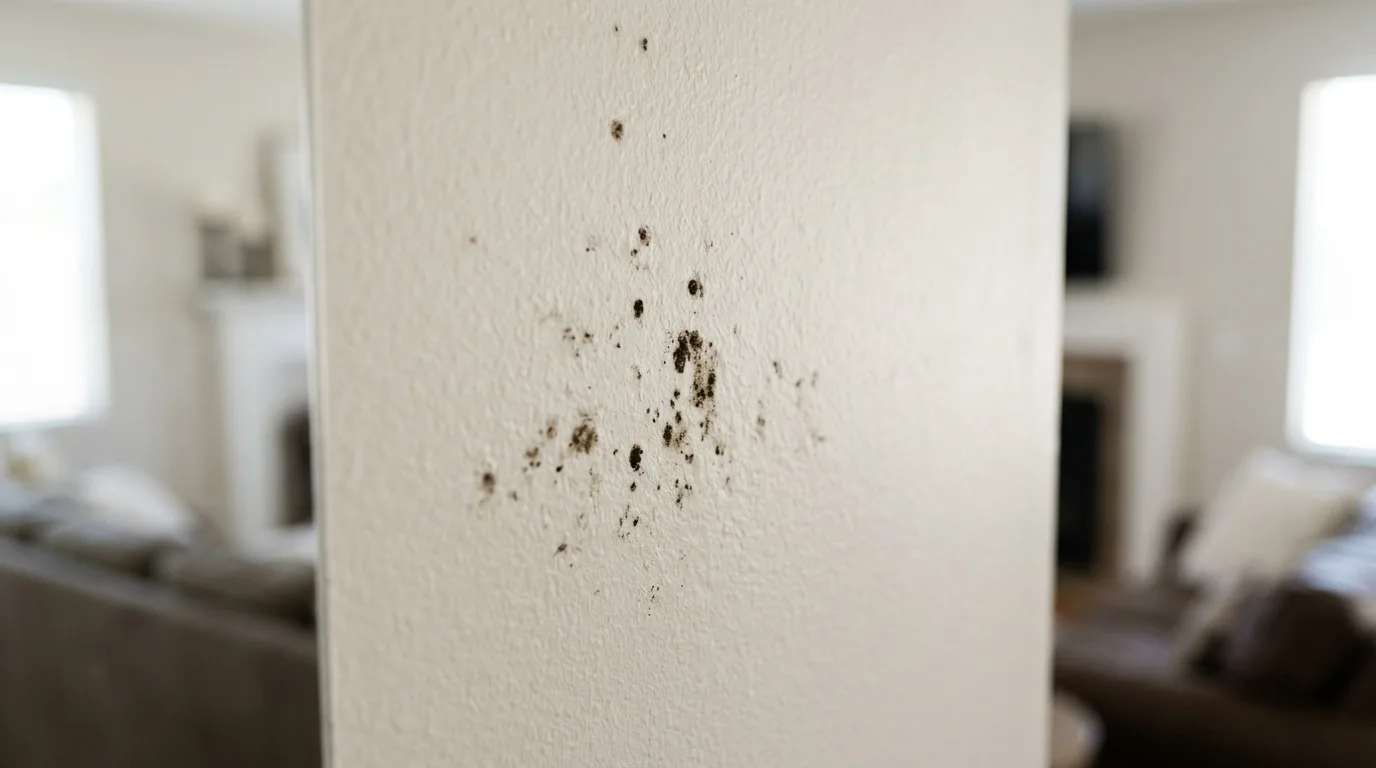
Dark Spots on Walls — Is It Really Mold?
In rooms with elevated humidity, dark spots sometimes appear on walls or ceilings. These black marks are essentially a fungus. If no systematic prevention is carried out, they show up in the bathroom, kitchen, corners, and above window frames. But not every dark stain is mold. How do you tell the difference?
It is actually quite simple to distinguish mold from ordinary dirt. Wipe the spot with a damp cloth. Dirt, even stubborn grime, will at least partially come off, while mold will remain on the wall. Another telling sign: dirt does not reappear in the same spot over and over. If you notice dark patches coming back after cleaning, it is not a matter of careless housekeeping.
Mold can also be identified by a specific smell — something like damp clothing, stale water, or a musty closet. If that odor lingers even after airing out the room and a thorough cleaning, there is likely a fungal colony growing somewhere nearby.
Signs Your Home in Poway May Have a Mold Problem
Wallpaper peeling away from the wall in the kitchen, bathroom, or other rooms is often the first visible sign. Moisture seeps between the wallpaper and the wall surface, breaking down the adhesive layer. Paint, when exposed to prolonged dampness, begins to bubble and flake.
In the kitchen and bathroom, grout between tiles turns greenish-black. If that discoloration does not scrub off with a wet rag, mold has established itself in the joints.
Beyond the visual cues, your own body can signal a problem. Nasal congestion, itchy and swollen mucous membranes, irritated eyes — these can all be reactions to airborne spores. Persistent coughing, shortness of breath, and worsening asthma or bronchitis symptoms in household members who were previously healthy may also point to a hidden mold source.
Spores travel through the air and settle on skin, causing rashes, redness, dryness, eczema, and itching. In cases of heavy contamination, general well-being deteriorates: fatigue, headaches, apathy, and even trouble with memory and concentration.
Where Black Mold Hides in a Typical Poway Home
Mold does not always grow in plain sight. It tends to hide in warm, humid, poorly ventilated spots.
Kitchen
The kitchen is warm and humid, and mold forms there easily. Check the rubber gasket of the refrigerator door — drops of liquid, grease, and food residue often collect there. Look under the lower compartment tray and the space beneath it; these are the most common spots for kitchen fungus.
Coffee makers are another breeding ground. Old water filters, a dirty milk circuit, debris in the waste compartment, and moisture in the drip tray all contribute. Each removable part should be thoroughly rinsed after use, since neglected maintenance leads to moisture and residue buildup.
Cabinets and drawers accumulate moisture from dishes that were put away still damp. The countertop around the sink stays wet unless you make a point of wiping it dry each time. Microwave ovens collect condensation during reheating; if that moisture is not removed promptly, fungus can appear on interior surfaces.
Bathroom
The bathroom is the most vulnerable room because of constantly elevated humidity and temperature. Mold multiplies fast here.
Inspect the toilet tank and its rim — due to the design, these parts are always exposed to moisture. They need regular cleaning with disinfecting products and should be wiped dry. The sink and the area around it, especially where the faucet meets the counter and around the drain, are potential problem zones.
A washing machine is a classic mold spot. Fungus grows between the folds of the rubber door gasket. If you do not wipe the seal dry after every load, mold will take hold. After each wash, leave the door open to ventilate and wipe away any condensation.
Stained clothes tossed into the drum and forgotten for days, or clean laundry left sitting in the machine for hours — both create the perfect conditions for mold on damp fabric. Soiled items should be washed promptly, and clean laundry hung on a drying rack right away.
If there is open space under the bathtub, moisture collects there and mold can appear. To prevent it, regularly wash the floor under the tub with warm water and a chlorine-based cleaner.
Everyday bathroom items can become fungal hotspots too: toothbrushes, damp towels and bathrobes, hairbrushes, and jars of skincare or cleaning products. All of these should be dried thoroughly or placed on a rack to air out.
Less Obvious Places
Pet water bowls, if not washed and dried regularly, become mold sources. The accumulated moisture is dangerous not only for people but also for animals — spores can enter a pet's system through stale water.
Children's toys, especially hollow rubber ones meant for bath time, can harbor mold inside. Cut open a rubber bath toy sometime and you may find spores already growing within.
Cosmetics past their expiration date can spoil quickly and develop fungal growth. Products like that must not be used under any circumstances.
What Creates a Favorable Environment for Mold
These microorganisms develop only where comfortable conditions exist. It is worth paying attention to the factors that let colonies establish themselves:
- Air humidity above 70 percent
- Air temperature of 70 °F and higher
- Lack of quality ventilation
- Excessively wide windowsills that block warm air from reaching the glass
- Wall or joint freezing (less common in Poway's climate, but possible in poorly insulated garages or shaded exterior walls during cooler months)
- Low-quality window construction that allows condensation
Poway's inland location means summer temperatures regularly exceed 90 °F, and when homeowners keep windows shut and air conditioning running, moisture from cooking, showering, and everyday activity can build up if ventilation is not adequate. The same summer routine applies in homes in neighboring Rancho Bernardo.
Why Black Mold on Walls Is Dangerous
There are several varieties of black mold, and each poses its own risks.
Aspergillus niger thrives in high-humidity environments like kitchens and bathrooms. It spreads spores through air circulation and can cause serious respiratory conditions, including pneumonia and asthma. In severe cases, it has been linked to more dangerous infections.
Aspergillus fumigatus is an extremely resilient fungus that survives across a wide temperature range. Its spores are so small that even in modest quantities they pose a threat. A healthy person can inhale up to about a hundred such spores without consequence, but a weakened immune system changes the equation entirely.
Alternaria alternata is commonly found on decomposing organic matter, seeds, and textiles. It triggers allergic reactions and can provoke asthma attacks in susceptible individuals.
Prolonged exposure to any mold in a living space can lead to respiratory disease, persistent headaches, digestive problems such as nausea and diarrhea, kidney strain, dermatitis, eczema, and eye infections.
How to Remove Mold from Walls Yourself
If the affected area is small — less than roughly ten square feet — you can try handling it on your own before calling a professional. The same ten-square-foot rule holds for mold on walls in Ramona homes.
Step 1: Protection
Put on an FFP2 or N95 respirator, rubber gloves, and safety goggles. Open the window or turn on an exhaust fan. Seal off other rooms if possible so that disturbed spores do not spread through the house.
Step 2: Initial Treatment
Soak the affected surface with an antifungal solution. Household options include chlorine bleach, white vinegar, a borax solution, or hydrogen peroxide (3 percent). Apply generously and let it sit for 15 to 20 minutes. For non-porous surfaces such as tile, glass, or metal, a bleach solution works well. For drywall or wood, vinegar or hydrogen peroxide is gentler and will not damage the material as quickly.
Step 3: Mechanical Cleaning and Repeat Treatment
Scrub the area with a stiff brush to remove the top layer of mold growth and biofilm. Then apply the antifungal solution again. It will penetrate deeper now that the surface layer of grime and biomass has been stripped away.
Step 4: Drying
Let the treated surface dry completely. Without full drying, you should not paint over the area or push furniture back against it. Trapping residual moisture behind a fresh coat of paint or a bookcase will only restart the cycle.
When Wallpaper or Paint Is Involved
If mold has grown behind wallpaper, removing just the visible spots will not help. The wallpaper must come off entirely in the affected zone, the plaster beneath should be stripped if it is crumbling or saturated, and the exposed wall treated with an antifungal product. Apply a deep-penetration primer, let it dry, re-plaster, prime again, and only then apply fresh wallpaper or paint. Skipping layers in this sequence usually means the mold returns within a season.
When to Call a Professional
Household chemicals often prove inadequate — they may lighten the surface appearance of mold without actually killing the root structure. If the affected area is larger than about ten square feet, if mold keeps returning despite repeated cleaning, or if anyone in the household has respiratory or immune system issues, professional mold remediation is the safer path.
Specialists use commercial-grade antimicrobial compounds and equipment such as HEPA-filtered air scrubbers and industrial dehumidifiers. They can also identify hidden moisture sources — a leaking pipe behind drywall, for example — that homeowners might miss.
Prevention: Keeping Mold from Coming Back
The best way to deal with mold is to prevent its appearance in the first place. Here is what helps:
- Maintain indoor humidity at or below 50 percent. A standalone dehumidifier targeted at problem rooms — the bathroom, laundry area, a below-grade bonus room — can make a real difference.
- Ensure adequate ventilation. Forced ventilation in the bathroom, combined with proper heating, should keep walls and ceilings dry. If the existing exhaust fan is undersized, replacing it is a straightforward fix.
- Air out the house regularly, even if you rely on air conditioning most of the year.
- Fix leaks promptly — dripping faucets, slow pipe joints, roof seepage after rain.
- Dry wet surfaces after use. Wipe down the shower walls, squeegee the glass, and hang towels to dry rather than leaving them bunched on hooks.
- Do not push furniture tight against exterior walls. Leave a gap of a few inches so air can circulate behind bookshelves and dressers.
- Check gutters and downspouts. In Poway, winter rains can overwhelm clogged gutters and send water cascading down exterior walls or pooling near the foundation.
A dehumidifier is designed to maintain a steady humidity level in the room. It deprives mold of its primary growth condition. When choosing one, make sure its capacity matches the volume of the room — an undersized unit will run constantly without bringing the humidity down far enough.
Getting rid of mold entirely on your own can be very difficult. If the problem persists or covers a large area, bringing in a qualified mold remediation company serving the Poway area is the most reliable way to resolve it and protect your household's health.
Spots that return after two rounds of cleaning usually mean moisture inside the wall; for that stage, see restoration services for Poway homes. Homes to the south can turn to mold remediation in Santee.