

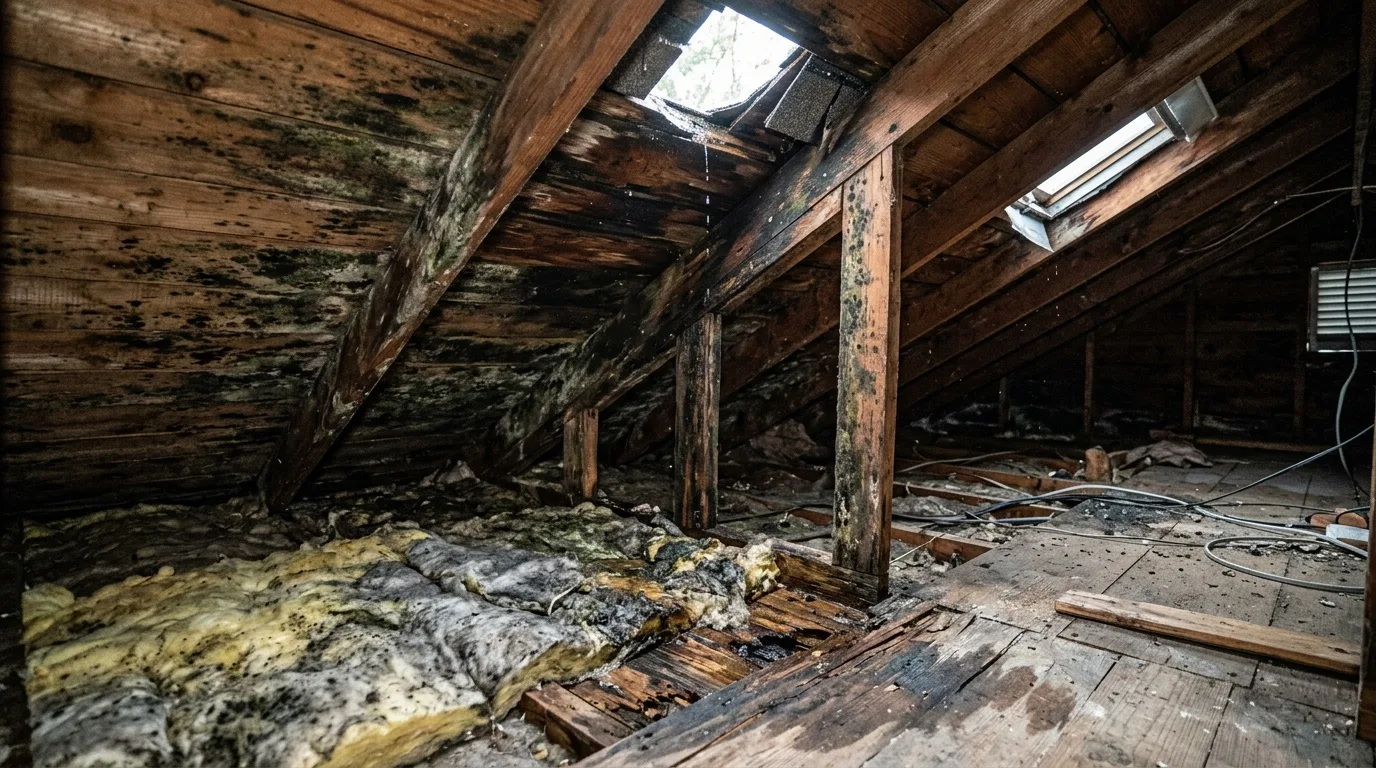
Why the attic becomes a home for mold
For a homeowner, finding mold in the house can be one of the most unpleasant and alarming things. Mold can be a dangerous addition to your space, and it carries both structural and health risks for the house and the family. One of the worst places to find it is the attic. Because this space usually goes unused, mold can live there for a long time without being noticed. Over time it grows and spreads fast and turns into a much more serious problem.
The attic is a closed area with high humidity and poor ventilation. If the roof has even small leaks or condensation, the wood and the insulation soak up moisture quickly. Combined with no regular air circulation, this creates an ideal environment for mold to develop.
The problem shows up especially often in single-family homes, where the owners rarely go up into the attic and mold stays unnoticed for years. It gradually affects the rafters, the insulation and even the interior walls of the house.
Mold is a fairly unpleasant thing and not rare in homes. Most often the cause is raised humidity, which helps it multiply. Attic mold comes in several kinds, and it can not only slowly damage the structure but also harm people's health. So what can be done about mold in the attic?
What attic mold looks like: black, white and other types
Very different kinds of mold can appear in an attic. The ones found most often in these places are white, green, blue and black mold. Any of them can cause health problems; the color does not tell you how harmful a mold is.
It settles on the roof sheathing, on the rafters and on the insulation. White mold in the attic is easy to take for dust, and black or dark spots on the wood are easier to notice. Either way, the color says less than the moisture behind it.
Signs of mold in the attic
To catch the problem in time, it is recommended to check the attic at least once a year. These signs point to mold:
- Stuffy air. Normally an attic should be well aired. If it is hard to breathe up there and it feels close, the ventilation is not working properly.
- Dark spots on the wooden beams. This is one of the most obvious signals that mold is developing.
- Wet insulation. Damp fiberglass or another insulation quickly loses its thermal properties and becomes a food source for mold. Mold in attic insulation is common for exactly this reason.
- A musty smell. This typical smell tells you that humidity is raised and mold spores are developing.
- Condensation on light fixtures, vent ducts or sensors. This is a clear sign of high humidity.
To deal with the problem, you first need to understand how to find mold in the attic. For this you go up into the attic and assess its condition. Signs of mold include a feeling of heat and stuffiness, a musty smell, spots of different colors on the framing, and drops of water or wet spots on the floor or on the roof itself.
What causes mold in the attic
One of the best ways to avoid mold growth in the house is to find out what causes it and deal with those issues before they become a problem. Mold is most often tied to moisture, and in the attic the two often go hand in hand. The main causes are roof leaks, condensation, raised humidity and weak air circulation. For mold to develop, four factors are needed:
- spores present,
- a food source,
- a suitable temperature,
- moisture.
Several different causes can lead to high humidity in the attic. Below are the most common ones.
1. Ventilation problems and blocked soffit vents
A well-ventilated attic is the key to keeping out moisture and mold. Ventilation in the attic should work by air coming in through the lower vents, warming up and leaving through the upper vents. This gives good air movement and keeps the space dry. Unfortunately, sometimes this ventilation cannot keep up with the outdoor air temperature, or the vents get clogged with insulation or debris. When that happens, the air in the attic becomes warm and damp but cannot get out. The result is stagnant air and condensation in the attic.
2. Bath and kitchen fans venting into the attic
Exhaust vents for the dryer, the range and the bathrooms are meant to move moisture from inside the house to the outside. Unfortunately, not all exhaust vents are installed properly, so it is important to make sure they do not end in your attic instead of outdoors. If exhaust fans push damp air straight into the attic, the chance of mold is very high. Even properly installed exhaust vents can break without regular maintenance, which leads to moisture building up inside the attic.
3. Missing or improper insulation
Insulation is a key part of the attic, since it helps keep warm and cool air in and lowers energy bills. Sometimes attic insulation is installed incorrectly, or the wrong type is chosen, which lets moisture in from the lower levels of the house. If the attic is not insulated properly, warm, damp air can move from the warm rooms of the house into the cooler attic, where condensation forms and mold grows.
If you plan to add more insulation to your attic space, ask an insulation contractor whether a plastic or foil backing suits your home, since in the wrong place these materials can easily trap moisture.
4. Roof damage and leaks
If shingles are missing on your roof or the flashing is damaged, these spots will most likely leak during rain. Water will collect in your walls and in the attic, and soon this creates ideal conditions for mold. In this case the spots appear locally, near the places where the roof leaks. If you see dark areas on the rafters, the roof may be leaking. If the cause is a damaged roof, part or all of the roofing may need to be replaced. Our notes on finding and fixing roof leak drips cover what to look for after heavy rain.
5. Water heaters or furnaces in the attic
In many Southern California homes the furnace, and sometimes the water heater, sits in the attic. Sometimes placing these appliances in the attic can lead to moisture building up. Incorrect installation of water heaters or furnaces in the attic creates a comfortable environment for mold to multiply.
If your home has a water heater or furnace in the attic, it is recommended to have a local service provider check the appliances once or twice a year.
6. Warm, damp air and coastal humidity
In a coastal city like Oceanside, damp outdoor air adds to whatever moisture rises from the rooms below. When there is no regular airing out, it settles on the wooden framing.
Is attic mold dangerous?
Whether the mold is toxic or not, it still does harm. It destroys wooden structures, giving off enzymes that literally "eat" the wood. Here are some of the consequences of mold in the attic for people:
- Allergic reactions. Mold can cause sneezing, coughing, watery eyes, a sore throat and a general feeling of being unwell. This is especially risky for people prone to allergies in general and for people with asthma.
- Weakened health. This is especially risky for people with a weakened immune system. They risk picking up a serious infection or a complication of an existing illness.
- Toxins. Some kinds of mold produce toxins. Although such kinds are rare, it is still worth protecting yourself and your family.
The rooms below are not sealed off from the attic. Through gaps in the ceiling, the same moisture and spores can reach the living space. Sometimes mold in the attic is one sign of a wider issue, which is covered in our article on when mold points to bigger moisture problems. Mold that first shows up indoors near the top of a wall is a related case; see why mold starts in ceiling corners.
If you notice mold, do not panic. Quickly figure out the cause and start acting.
Mold in the attic: what to do
According to the EPA's guide to mold cleanup at home, the key to mold control is moisture control. Most people can clean a patch of mold under about 10 square feet themselves. Bigger areas, or mold caused by sewage, call for a professional.
Do not run an HVAC system you suspect is contaminated with mold. In an attic with ducts or an air handler, this matters before anything else.
Do it yourself or not
The order of steps is the same either way:
- Find and remove the cause of the moisture. Otherwise the problem will come back even after cleaning.
- Scrub the stains with detergent and water. Wear an N95 respirator, gloves and goggles, and do not dry-brush mold in a closed attic.
- Treat the wood with an antimicrobial product made for wood, following its label.
- Set up the ventilation. This is critical to keep the mold from returning.
- In difficult cases, have a roofer repair the roof. If the cause is a damaged roof, part or all of it may need replacing.
If you cannot find the reason the mold appeared on your own, it is worth having the roof and attic inspected to find out whether the problem is poor ventilation, a roof leak or installation mistakes. If the cause lies in the roof itself, for example in how the roofing was installed, an inspection makes sense, and the covering may need replacing.
How to get rid of mold in the attic: what a professional does
The work starts with the moisture: the leak, the fan that vents into the attic, the blocked vents. After that comes cleanup with HEPA equipment, then treatment of the wood, or replacement of sheathing and insulation that cannot be saved. Remember that if you need mold removal, you also have to remove the source of the problem; otherwise the mold can come back. If the attic took on water from a leak, water damage restoration after a leak is part of the same job. More about this work is on our mold remediation services page and on the page about mold remediation for Oceanside homes. You can also read more about our restoration team.
Preventing mold in the attic
It is important to understand how to prevent mold in the attic. This helps avoid possible health problems, damage to the roof and expenses. To keep mold out, follow these recommendations:
- provide good insulation;
- plan the ventilation system properly;
- keep your attic dry.
Proper ventilation of the attic space is also a condition of the warranty from many roofing material manufacturers. Keep the conditions right, following a pro's advice, and check the condition of the attic every year. Humidity in the rest of the house matters too; there is more on that in our guide to controlling indoor humidity to stop mold.
Does insurance cover mold in the attic?
It depends on the cause. Mold that follows one kind of water damage may be treated differently from mold that grew from long-term humidity or a slow leak. Check your own policy and talk to your insurer.
Mold is a serious problem that has to be dealt with quickly and safely. Do not wait until the problem with mold gets worse.