

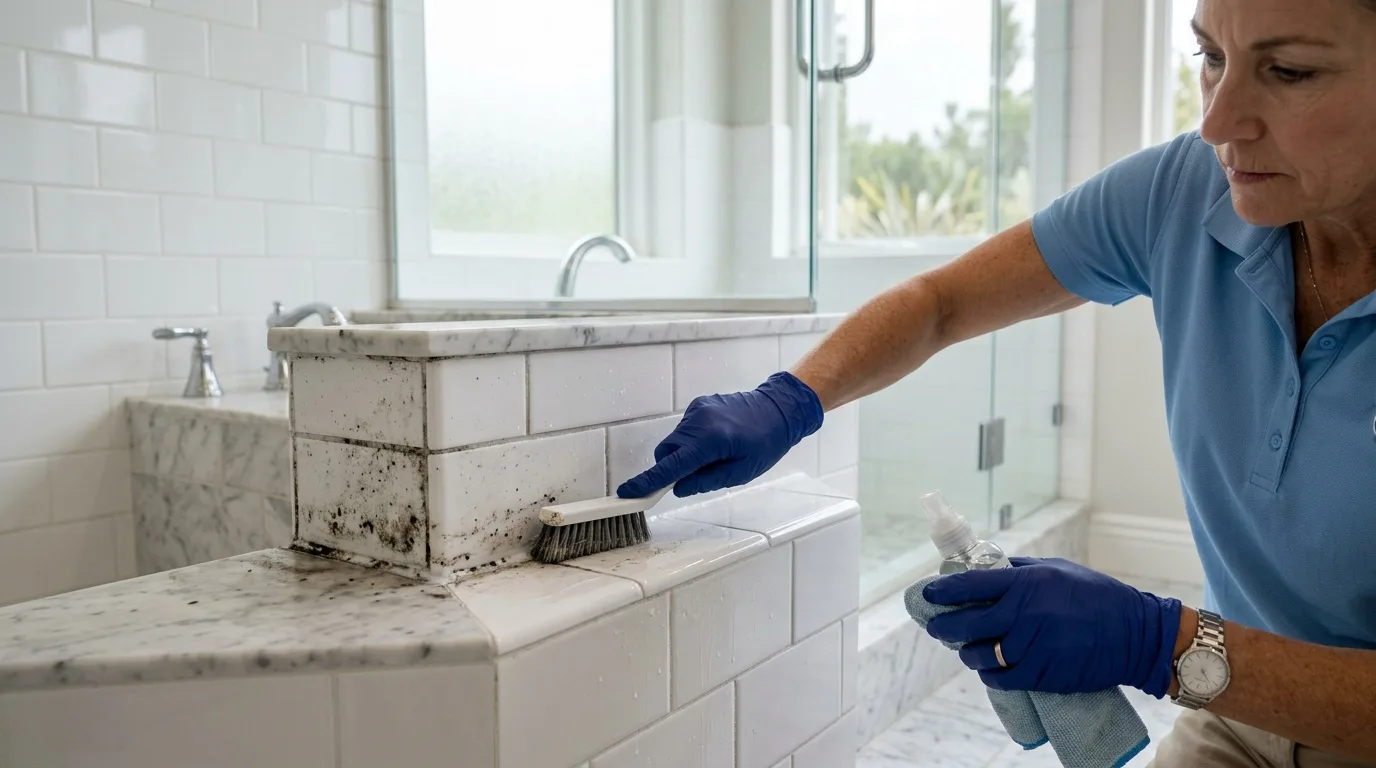
What mold actually is and why it matters
Mold is a coating that appears on surfaces as a result of microscopic fungi doing their thing. Hundreds of species of these fungi exist in nature, and their general purpose is breaking down organic waste. They reproduce through spores, which is how they expand their colonies.
In bathrooms and restrooms the most common visitor is the black mold fungus Aspergillus niger. It favors dampness, warmth, and the absence of direct sunlight. You can spot it by the darkened patches — typically along the grout-filled joints between tiles that have changed color. In Rancho Santa Fe homes, even with the generally dry Southern California climate, bathrooms still create a microenvironment where these conditions are met easily.
The consequences are not just cosmetic. Mold contributes to skin conditions. It puts a constant load on the immune system, exhausting it and making the body vulnerable to new infections. It destroys finishing materials and furniture. It makes the room look neglected and dirty. Mold spreads fast, and protecting yourself from its harmful effects gets harder as the colony grows. Leaving the problem alone is not an option. The fight needs to start the moment you notice the first darkened patches in the tile joints.
Why mold appears in the first place
Spores get into the room with the air — they are very small and light. For the spores to germinate, certain conditions must be present: high humidity, darkness, and weak ventilation. All of this exists in a typical bathroom. Bathrooms in homes around Solana Beach share these three conditions.
Dampness is a consequence of regular bathing, washing, and hanging wet laundry. Heat comes from frequent use of hot water and the presence of a towel warmer or heated floor. Lack of sunlight is typical for windowless bathrooms in standard homes. Poor ventilation leads to stagnant humid air that cannot be cleared out or dried.
On silicone sealant the situation is slightly different. Mold feeds on organic materials that naturally accumulate on these surfaces. The combination of trapped moisture, high humidity, and no air circulation creates ideal conditions. In Rancho Santa Fe, where summer temperatures stay high for months, a poorly ventilated bathroom can become a breeding ground surprisingly fast.
Cleaning mold from tile grout: household remedies
Hydrogen peroxide
Kills the fungus quickly and prevents it from multiplying again. Works well for destroying black spots in damp tiled spaces and for disinfecting shower curtains.
To use it, buy a 3% solution at a pharmacy, pour it into a spray bottle with water at a ratio of 1 part peroxide to 2 parts water, and shake. Put on rubber gloves and old clothes, spray the affected surface generously, and wait for it to dry. Then go over the treated areas with a sponge and wipe thoroughly with a damp cloth.
Baking soda and vinegar
The fungus does not tolerate acetic acid, and tile grout along with the ceramic itself are not damaged by treatment with this substance.
Pour 9% vinegar into a spray bottle and spray the surface. After 10 minutes, rinse with water. If that did not help, mix a paste of 3 parts baking soda and 1 part water, then spread it over the affected areas. Spray 9% vinegar on top of the paste and scrub with a stiff nylon sponge or brush until the black zones lighten. Wipe the tile and joints with a damp cloth at the end.
Tea tree oil
A natural antibacterial substance that eliminates pathogenic bacteria and fungal spores. Pour a teaspoon of pure essential oil into a glass of water, fill a spray bottle with the solution, and shake vigorously. Dampen the mold-affected surface, spray the oil-water mixture, and wait one hour. Then scrub the tiling with a damp sponge.
Boric acid
This component works effectively in combination with water and 12% hydrogen peroxide. Combine equal parts water and peroxide — say, one glass of each — with 20 grams of powdered boric acid. Fill a spray bottle with the mixture and spray on the affected areas. Repeat after 10 minutes and wait another half hour. Use the remaining solution on a sponge to scrub the surface until the blackness disappears completely. Do not rinse the treated surface with water so the dried film continues to work.
Ammonia
Working with volatile ammonia requires thick household gloves, a face mask or respirator. Old clothes are also necessary, and you should think in advance about how to ventilate the room quickly after you finish.
Spray a 5% ammonia solution onto the tile and grout, leave it for ten minutes. Remove the residue with a disposable cloth, do not rinse with water. Ventilate the home for several hours. Never mix ammonia with bleach — this combination releases toxic fumes.
Copper sulfate
Dissolve thirty grams of the powder in one liter of water in a glass jar. After thoroughly washing the affected areas with a sponge and soapy water and letting them dry completely, wipe the moldy spots with a sponge dipped in the copper sulfate solution. Ensure good ventilation and hand protection. Let the solution dry for 5 to 10 hours, then rinse the tile and joints thoroughly.
Citric acid
Helps destroy recently settled spores that have not yet penetrated deeply into the grout. It is harmless, even suitable for treating children's bath toys, and does not require hours of ventilation or special precautions. Dissolve a packet of citric acid powder in one liter of water and stir. Rub the mixture into the stained areas. There is no need to scrub or rinse off the dried solution.
Cleaning mold from silicone sealant
Silicone joints around bathtubs, shower stalls, and sinks in Rancho Santa Fe bathrooms deserve separate attention. The sealant is softer than cement grout and more porous in practice, so mold can embed itself deeper.
Vinegar and baking soda method
Spray white vinegar onto the sealant from a bottle and leave it for 15 to 30 minutes so the vinegar can break down the mold. Then mix baking soda with warm water into a paste and apply it directly to the sealant, pressing it into corners and joints. Scrub with an old toothbrush. Rinse with water and dry.
Hydrogen peroxide for stubborn stains
For more persistent contamination, spray hydrogen peroxide onto the sealant and let it soak in for 15 to 30 minutes before scrubbing. This works better than vinegar on older growth.
A note on bleach
Chlorine-based bleach can destroy the sealant itself over time. If you use it, dilute heavily and do not leave it on for extended periods. Never mix bleach with ammonia.
When to replace the sealant entirely
Check sealant monthly for signs of peeling or cracking. Silicone typically lasts 3 to 5 years depending on humidity levels. If mold keeps returning despite cleaning, the only real solution is to cut out the old sealant, clean and degrease the surfaces with a solvent, and apply a new bead. Use a moisture-resistant silicone with built-in mold protection additives.
Store-bought chemical cleaners for grout
Chlorine-based cleaners
Gel or liquid products based on concentrated chlorine are used for treating hard, low-absorption surfaces with characteristic black marks. Apply equal parts cleaner and water from a spray bottle, leave for ten minutes, scrub with a brush, and rinse with running water. Not suitable for tile installed on drywall or wood substrates.
Oxygen-based bleach
This category of household chemistry works not only for removing stains from white textiles but also for killing fungus. Dilute one part bleach with two parts water, spray onto tile and joints, wait ten minutes, scrub with a brush, and rinse. Oxygen bleach releases toxic vapors. Keep the exhaust fan running for at least thirty minutes after treatment.
Professional antifungal products
Specialized antifungal formulas are designed to kill fungus and prevent regrowth. They are usually more environmentally friendly: they do not give off an unpleasant odor, do not require gloves, and are suitable for application on concrete, ceramic, brick, and plastered walls. Still, follow the manufacturer's instructions exactly.
Preventing mold from coming back
Turn on the exhaust fan every time after bathing. The drier the air in your bathroom, the lower the chance of mold appearing. The fan should run for at least ten minutes after a shower or bath. All the steam needs to leave the room completely. If there is a window, open it. In Rancho Santa Fe, the outdoor air is usually dry enough to help. Near the coast, Encinitas homes with mold issues call for the same fan routine.
Wipe the tile dry after the last person in the household finishes bathing for the night. This applies especially to the sink area and the tiled walls around the shower.
Wipe down and put away bath toys in a dry spot right after use.
Inspect the tile once a week if you cannot manage to dry out the bathroom air regularly. Once a month, go over the joints with a brush dipped in an antifungal solution or your preferred cleaning product.
Dry laundry on a balcony or in any other room that you can ventilate thoroughly and keep at an acceptable humidity level. Hanging wet clothes in a bathroom where you have already found the telltale gray-black marks is not recommended until the problem is fully eliminated.
Maintain stable temperatures. Ensure that external walls, if any, are properly insulated to prevent condensation. Consider installing a forced ventilation system if the existing one is not doing its job. These steps may sound basic, but for homes in Rancho Santa Fe — where bathroom humidity can spike even while the rest of the house stays comfortable — they are the difference between a one-time cleanup and a recurring problem.
Grout that darkens again a week after cleaning usually means water is getting behind the tile, and mold remediation in Rancho Santa Fe covers that repair. Families farther east have mold remediation in Rancho Bernardo nearby.