

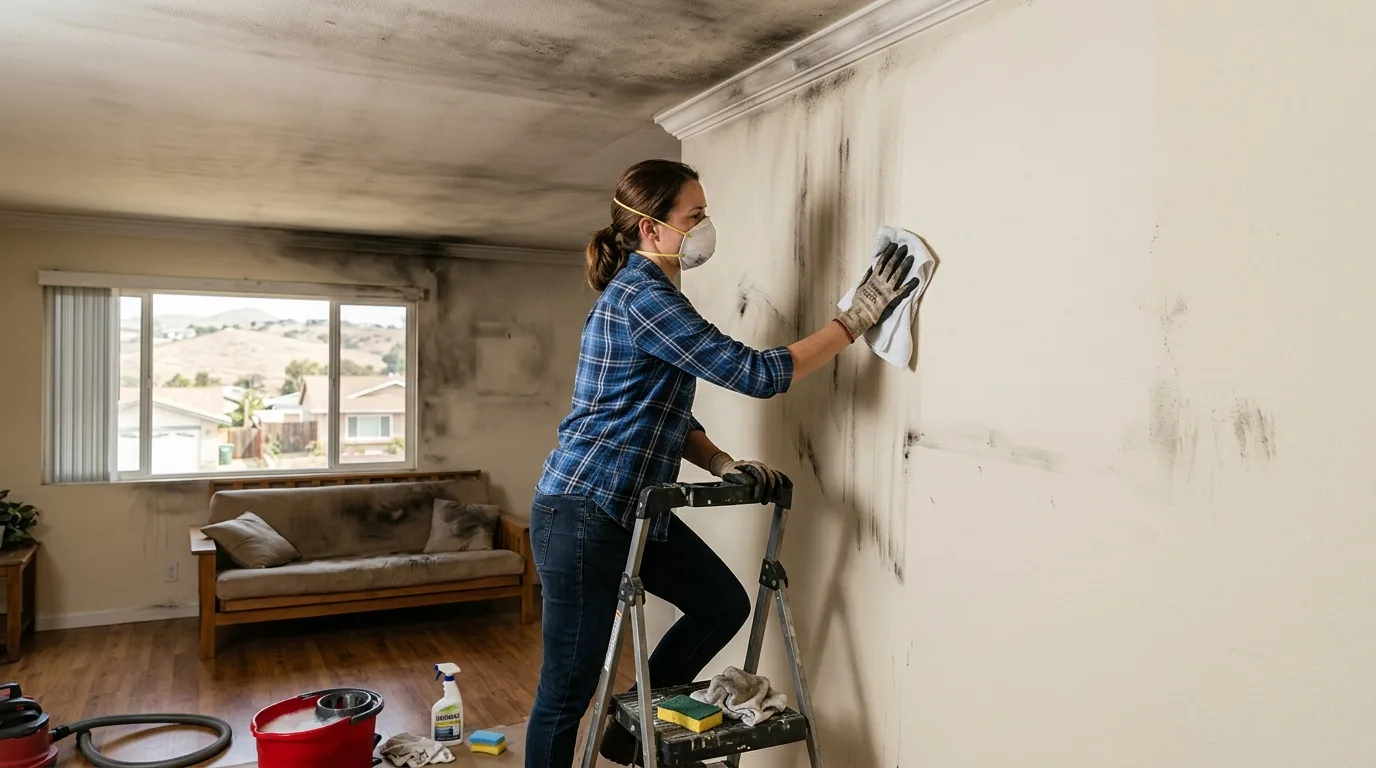
Where soot comes from and why it matters
Soot deposits on walls and household items show up not only after a house fire but also from regular fireplace use or even a kitchen mishap. The residue consists of fine particles of burned material. Depending on what was burning, soot can be dry and powdery, greasy, or sticky and tar-like. Each type calls for a different removal approach.
One critical warning before you start: do not wipe soot-covered areas with a damp cloth right away. The particles will get pushed into micro-cracks in the surface and stay there permanently. Dry removal always comes first.
Preparing for the cleanup
Before you begin, put on protective gear. You will need safety goggles, rubber gloves, a respirator or dust mask, and long-sleeved clothing. An apron is a good idea too — soot particles are toxic, and direct contact with skin and mucous membranes should be avoided. Open all windows so fresh air flows through the room while you work.
Cover the floor and any furniture you are not cleaning with old newspapers, drop cloths, or polyethylene sheeting. This keeps loose soot from spreading to clean surfaces as you scrub the walls and ceiling above.
Step one: dry cleaning
Start with a vacuum cleaner. Run it over the walls and ceiling without pressing hard — the goal is to lift the loose layer of soot, not grind it deeper into the material. After vacuuming, use a dry broom or brush to sweep off whatever remains. Work with short, brisk strokes from top to bottom. Avoid back-and-forth scrubbing motions; they only spread the residue around.
Chemical sponges sold at hardware stores are useful at this stage. These sponges are impregnated with a solvent that breaks down greasy soot on contact. As the surface of the sponge darkens, slice off the dirty layer with a utility knife and keep going with a fresh face. For a large affected area — say, an entire wall or the whole ceiling of a room — buy several sponges before you start.
Step two: washing walls and ceilings
Wet cleaning should come only after the dry phase. If you skip straight to mopping, you will simply push the soot deeper into the wall or ceiling finish.
Dampen a clean sponge in warm water and apply a small amount of dish-washing gel along with a few drops of a bathroom cleaner that contains a degreaser. Work in gentle strokes, moving from top to bottom. Rinse the sponge frequently — once it turns dark, wring it out and re-soak it in clean water. After the entire surface has been treated, go over it once more with plain water and wipe dry with a clean cloth.
An alternative to commercial cleaners: dissolve two tablespoons of baking soda in two cups of warm water. This solution handles light to moderate soot well and leaves no chemical smell behind.
Home remedies that work
Santee homeowners dealing with minor smoke damage often have what they need already sitting in the kitchen cabinet. Here are several proven combinations.
Laundry soap solution
Grate about two tablespoons of bar laundry soap (the plain, unscented kind) into two liters of warm water. Stir until dissolved. Apply with a soft cloth or sponge, let it sit for a couple of minutes, then wipe off and rinse. This works on painted drywall, tile, and laminate.
Trisodium phosphate
Dissolve roughly 120 grams of trisodium phosphate (TSP) in two liters of water. TSP is a strong degreaser. It handles stubborn, oily soot that dish soap cannot cut through. Wear gloves — the solution is alkaline and harsh on bare skin. Rinse the wall thoroughly afterward.
Ammonia and vinegar
Add one to two tablespoons each of household ammonia and white vinegar to five liters of water. This mix is particularly good for plastic trim, glass, and smooth non-porous surfaces. It leaves streaks on matte-finish paint, so test a small patch first.
Dish soap alone
One tablespoon of liquid dish soap per liter of warm water. The simplest option for light smoke residue — soot from a briefly smoking pan or a candle incident. Apply, scrub gently, rinse.
Cleaning soot off brick and masonry
If the fire or smoke source was near a brick wall, a fireplace surround, or exposed masonry in a Santee home, the approach changes. Brick is porous, so soot gets trapped in its texture. The same care applies to brick in homes in nearby El Cajon.
Salt and laundry powder paste
Mix 30 grams of table salt with 30 grams of powdered laundry detergent. Add just enough water to form a thick paste. Wet the brick surface first with plain water, then apply the paste with a sponge. Let it sit for about fifteen minutes — the foam will gradually turn black as it pulls soot out of the pores. Scrub off with a stiff brush. Repeat if needed.
Baking soda and vinegar
Dissolve two tablespoons of baking soda in 400 milliliters of water and wipe the brick surface. While it is still damp, spray vinegar generously over the treated area. Wait thirty minutes. The mild chemical reaction loosens the soot. Scrub with a brush and rinse with clean water.
Straight vinegar and ammonia
For heavier deposits: wet the masonry, apply undiluted white vinegar, and wait thirty minutes. Remove with a metal brush, working carefully so you do not gouge the mortar joints. An alternative is half a cup of ammonia dissolved in a full bucket of water. After treatment, rinse the entire area thoroughly with clean water and ventilate the room — ammonia fumes are strong.
Vacuum-assist method
If you have a wet-dry shop vacuum, dissolve laundry powder and 30 grams of salt in its water reservoir. Run the vacuum over the brick. This pulls soot out of the pores mechanically while the detergent solution breaks down the greasy layer. Use this method cautiously on old or soft brick — the suction and moisture can dislodge crumbling mortar.
Other surfaces around the house
Windows
Plastic-frame windows and double-pane glass clean up well with any alcohol-based glass cleaner. Spray, wipe with a lint-free cloth, repeat if a haze remains.
Plastic and laminate
Wipe with a sponge dampened in rubbing alcohol or mineral spirits, then follow up with a regular all-purpose cleaner. The solvent dissolves the oily binder in soot; the detergent removes the loosened residue.
Wood trim and metal
For raw wood or bare metal with heavy soot, fine sand or crusite (ground brick) can act as a mild abrasive. Rub gently along the grain on wood. On metal, a wire brush works but will leave scratches on polished finishes — use only on rough or painted metal.
Whitewashed or lime-painted ceilings
Soot bonds tightly to lime-based finishes. Wipe the surface with rubbing alcohol to dissolve the greasy component first, then wash with soapy water. In many cases after a fire, the most practical solution is to scrape the old whitewash off entirely and apply a fresh coat once the ceiling is clean and dry.
When to call a professional
The methods above handle light to moderate smoke damage — a kitchen fire that was caught early, a fireplace backdraft, or a smoldering appliance. If the soot layer is thick, if the smell of smoke persists after two full cleaning passes, or if the fire reached structural elements, the situation is beyond a weekend project. Professional restoration crews use industrial-grade degreasers, ozone generators, and HEPA-filtered equipment that a homeowner in Santee will not typically have on hand. They also know how to assess whether drywall, insulation, or framing behind the walls absorbed smoke and needs to be removed rather than cleaned.
Regardless of the severity, document everything with photos before you start cleaning. Insurance adjusters in San Diego County will want to see the original condition of the walls and ceilings. Our crews follow the same order during fire damage restoration in Lakeside.
Soot that returns after two cleaning passes, or smoke that reached the framing, is a job for a crew. We handle it in Santee and up the road with fire damage restoration in Poway; our full list of service areas shows the rest.