

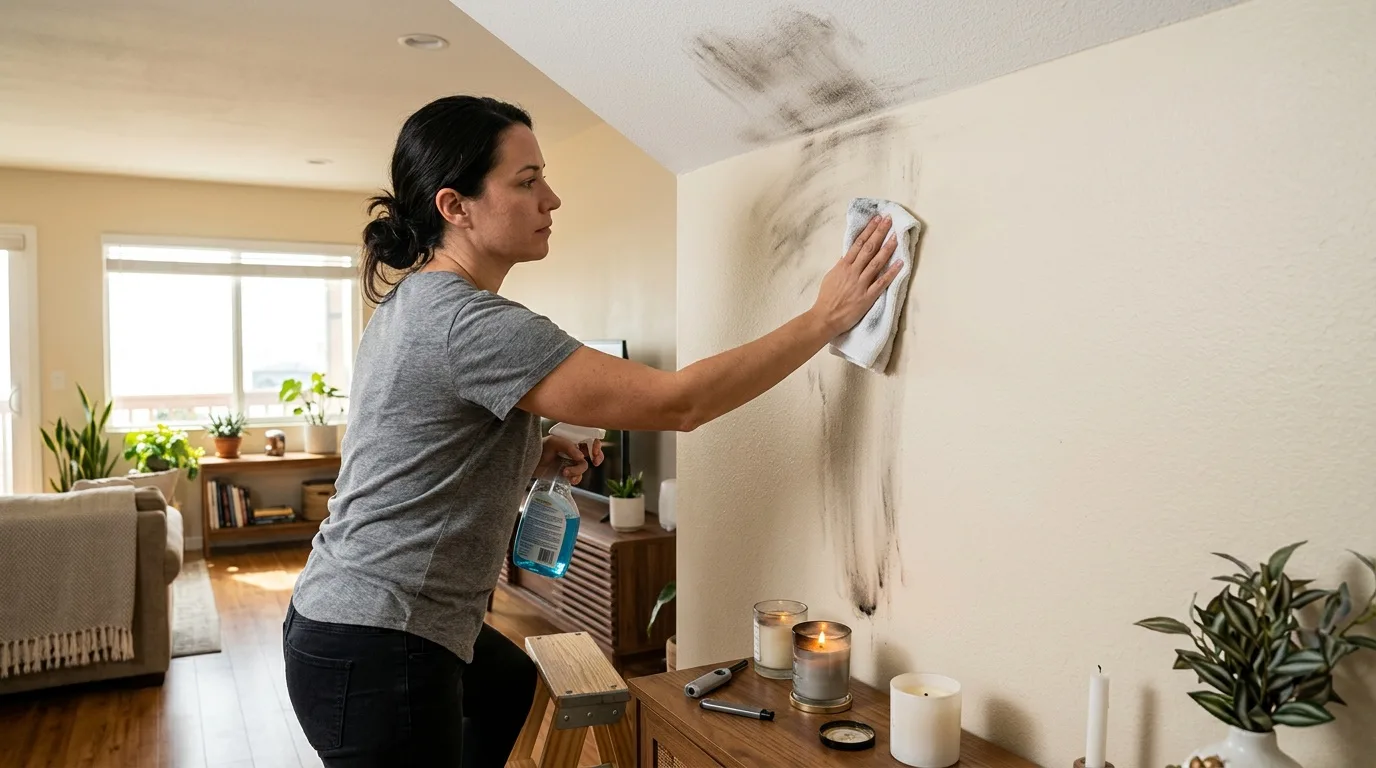
Where Candle Soot Comes From and Why It Sticks
Candle soot consists of fine particles of incompletely burned carbon. These particles are extremely small, sticky, and penetrate easily into the structure of a surface. On kitchen walls and ceilings, they often mix with airborne grease, forming a tacky grayish or yellow-brown film. In rooms where candles burn regularly — a living room, bathroom, or bedroom — the residue tends to be drier but still bonds firmly to paint, wallpaper, and ceiling material.
The main reasons soot accumulates on walls and ceilings in Imperial Beach homes include an untrimmed or overly long wick, a candle placed too close to a wall, drafts that make the flame flicker and produce more smoke, and debris in the melt pool that gets caught by the flame. Paraffin candles in particular generate noticeably more soot than beeswax or soy alternatives.
What to Prepare Before You Start Cleaning
Before you begin removing soot, gather the right supplies. Using the wrong tools or skipping the dry stage can spread the stain and make things worse.
Supplies and tools
- Two containers — one for the cleaning solution, one for clean rinse water
- White microfiber cloths (several — they get dirty fast)
- A soft sponge without a rough scrubbing layer
- A dry-cleaning sponge made of latex rubber (sometimes called a chemical sponge) — these do not need water and lift soot mechanically
- A sturdy step ladder
- Plastic sheeting to protect furniture and flooring beneath the work area
Personal protection
- Rubber or nitrile gloves
- Safety glasses
- A respirator or dust mask if the soot layer is heavy
- A cap or bandana to keep particles out of your hair
Step One: Dry Removal — Do Not Skip This
The most common mistake is reaching for a wet rag right away. When dry soot contacts water, it turns into a dark paste that smears across a much larger area. Always start with dry removal.
Take a dry-cleaning sponge (latex rubber) and wipe the wall using downward strokes only. Do not scrub in circles. Start from the top of the stain and work your way down. As the sponge surface gets loaded with carbon, slice off the dirty layer with a knife and continue with the clean face underneath. This approach lifts the loose soot without pushing it deeper into the surface.
If you do not have a chemical sponge, use a clean, dry microfiber cloth and blot — do not rub — the soot in gentle pressing motions.
Step Two: Wet Cleaning for Walls
Once you have removed as much soot as possible by dry methods, move to wet cleaning. The specific approach depends on the surface type.
Painted walls (latex or acrylic paint)
Degreasing cleaners work well here. You can use dish soap, a gentle all-purpose cleaner, or liquid hand soap. Mix a small amount with warm water, dampen a soft sponge, wring it almost dry, and wipe the wall in straight downward strokes. Avoid soaking the surface — excess moisture can soften the paint or leave watermarks.
Using vinegar
White vinegar can be used full-strength or diluted with water. Apply it to a clean cloth or cotton pad and blot the sooty area. Vinegar breaks down the oily film that binds carbon particles to the surface. After treatment, wipe the spot with a damp microfiber cloth to remove the vinegar residue.
Rubbing alcohol
Dampen a cotton pad with rubbing alcohol and press it against the soot mark. Alcohol dissolves the greasy layer around the carbon. This works particularly well on small, concentrated spots — for example, the dark ring a candle leaves on a shelf or the wall directly behind it.
Finishing wash
After any cleaning agent, go over the treated area with a cloth dampened in plain warm water to remove chemical residue, then wipe dry with a clean towel. Leftover soap or vinegar can attract dust and leave streaks.
Cleaning Ceilings — Surface by Surface
Ceilings collect soot faster than walls because warm air and smoke rise. The cleaning method depends on the ceiling type.
Glossy stretch ceilings (PVC film)
PVC film is sensitive to abrasives, acetone, and undiluted solvents. Start with a dry microfiber cloth, blotting gently to pick up loose soot. Then prepare a weak solution of a neutral dish soap in warm water (roughly 25–35 °C). Dampen a soft cloth, wring it out thoroughly, and wipe in straight, overlapping passes — never in circles. Rinse with a clean damp cloth, changing the water frequently. Finally, wipe the surface dry in one direction using a lint-free cloth. To restore the gloss, you can add a small amount of ammonia (one part to ten parts water) to the rinse water, but only if the manufacturer's instructions allow it.
Matte stretch ceilings
Matte PVC shows streaks less than gloss, but it is cleaned the same way. Any cleaning product without solid particles will work — liquid soap, dish soap, or a diluted ammonia solution (one to ten). Test on a hidden area first. Do not press hard: strong pressure can stretch the material or push soot deeper into the texture. After cleaning, blot dry with a fresh cloth.
Fabric (textile) stretch ceilings
Fabric ceilings absorb contaminants more deeply than PVC film. Do not soak them — excessive moisture can drive the stain further into the fibers. Use a barely damp microfiber cloth with a weak neutral cleaner and dab rather than wipe. If the soot has penetrated the weave and leaves a shadow after cleaning, professional treatment is usually the only option.
Painted drywall or plaster ceilings
Flat latex paint is the hardest to clean because soot settles into the porous finish. Try the dry-sponge method first, then a mild soapy solution with minimal water. If a faint stain remains after drying, a second coat of ceiling paint over a stain-blocking primer may be the practical answer.
Common Mistakes That Make Things Worse
- Wetting thick soot before dry removal. Dry soot turns into a dark slurry that is far harder to remove than the original powder.
- Using abrasive pads, stiff brushes, or scouring powder. These scratch painted surfaces, damage PVC film, and grind carbon particles deeper into the finish.
- Applying acetone or strong solvents. Acetone dissolves PVC stretch ceilings and can strip paint.
- Scraping with a knife or razor. A localized soot spot can become a cut or gouge in the surface.
- Using a steam cleaner without manufacturer approval. Steam can deform PVC film and force moisture behind the ceiling panel.
- Mixing cleaning agents. Combining chlorine-based cleaners with acids produces toxic fumes. Stick to one product at a time.
How to Prevent Candle Soot in the First Place
Preventing soot is always easier than cleaning it. A few habits make a real difference, especially in smaller Imperial Beach apartments where candles burn close to walls and ceilings. The same habits help in apartments in nearby Chula Vista.
- Trim the wick before every use. Cut it to about a quarter of an inch (roughly half a centimeter) before lighting. A long wick is the single most common cause of heavy sooting.
- Watch the wick while the candle burns. If the wick grows a black mushroom-shaped ball at the tip, blow out the candle immediately, let it cool, trim the wick, and remove the carbon ball before relighting.
- Keep the melt pool clean. Remove any matchstick ends, wick trimmings, or debris from the liquid wax — they act as secondary fuel and produce extra smoke.
- Avoid drafts. Place candles away from open windows, fans, and air-conditioning vents. A flickering flame generates far more soot than a steady one.
- Do not move a lit candle. Blow it out first, move it, then relight.
- Keep candles at least 12 to 24 inches from walls. This distance allows the rising smoke column to disperse before it reaches a surface.
- Choose the right wax. Soy and beeswax candles produce significantly less soot than paraffin. If you burn candles often, switching the wax type is probably the single most effective preventive step.
- Ventilate the room. Light, regular airflow carries soot particles out rather than letting them settle on surfaces. Turn on an exhaust fan or crack a window on the far side of the room.
When to Call a Professional
Minor soot marks from a single candle are a straightforward DIY job. But there are situations where professional cleaning is the better choice:
- The soot covers an entire ceiling or spans multiple rooms.
- The residue is old, sticky, and no longer responds to household cleaners.
- You have a fabric stretch ceiling and the stain has soaked into the fibers.
- You are not sure what material the ceiling is made of and do not want to risk damaging it.
- Streaks or discoloration remain after your own cleaning attempt.
- The soot came from a larger fire event rather than candle use, and there may be structural or electrical concerns behind the cosmetic problem.
A local cleaning company familiar with the types of homes in Imperial Beach can assess the surface, choose the right solution, and avoid the trial-and-error that sometimes turns a soot stain into a bigger repair project. We also handle smoke and soot cleanup in Coronado, just up the Silver Strand.
When candle soot has spread across a whole ceiling or into several rooms, a crew can take it from there — see soot and smoke cleanup in Imperial Beach, or fire damage restoration in National City for homes further up the bay.