

Why Burnt Food Smell Lingers and What to Do First
Forgetting a pot on the stove happens to even the most experienced cooks. You step away for a couple of minutes, and the dish is already smoking and spreading a foul burnt odor through every room. Even if you throw every window open, the smell will hang around for a long time on its own. But there are reliable ways to clear it out quickly and thoroughly.
When food burns on the stove, the air fills with smoke that can contain formaldehyde, combustion byproducts from food, spices, and enamel coatings. These odors are not just unpleasant — they can pose a health risk. That is why fast action matters. If you do not deal with the smell within the first few hours, traces of it can linger in the air and in fabrics for months.
Step One: Get Rid of the Source and Ventilate
The very first thing to do is remove the ruined food from the kitchen. Do not just toss it in the trash can and forget about it — bag everything tightly and take it straight out to the dumpster. As long as the burnt remains sit inside, they keep releasing odor.
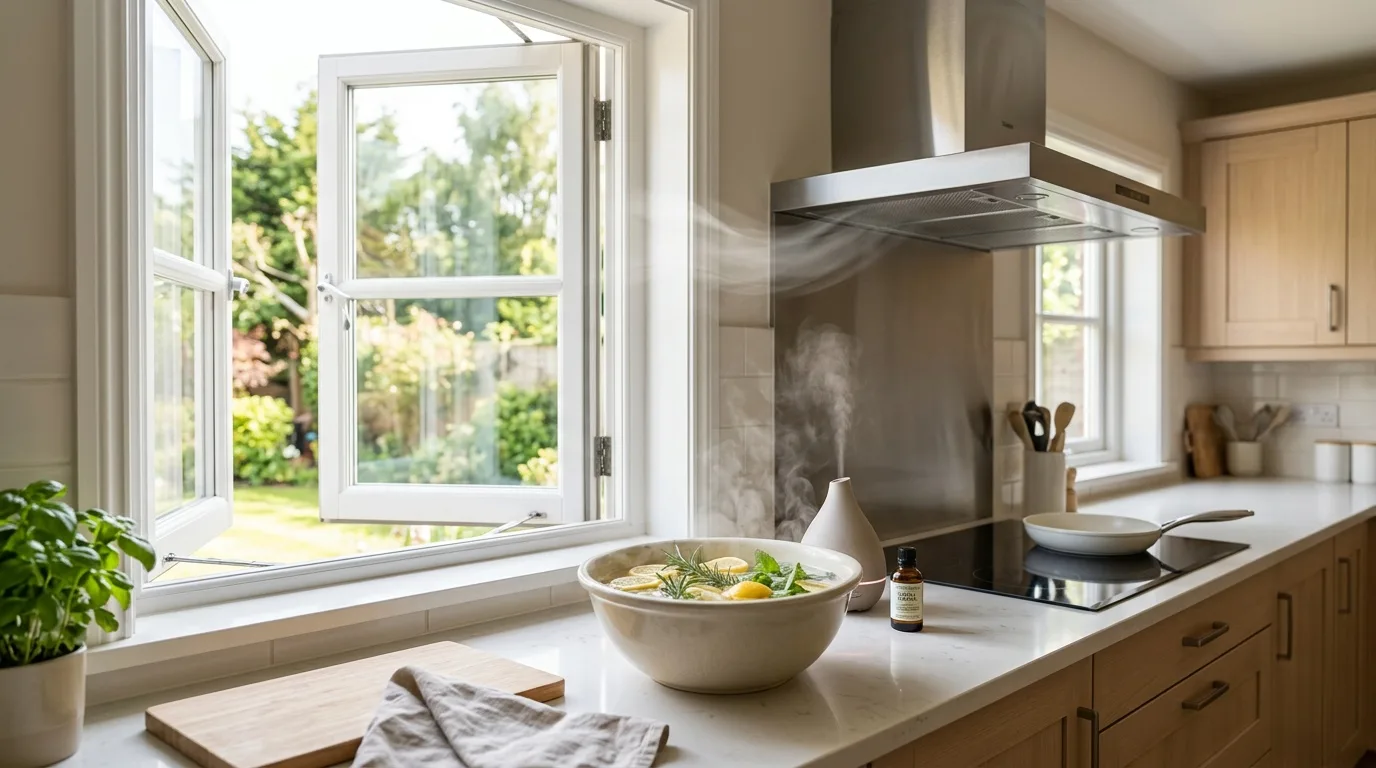
Next, open all the windows. In San Diego the mild climate works in your favor here — you can keep them open as long as needed without worrying about freezing the place. The same mild weather helps homes in nearby La Mesa air out too. Turn on the kitchen exhaust hood, ceiling fans, a portable fan, or the air conditioner. The point is to get the air moving.
Opening the front door at the same time as the windows creates a cross-draft that pulls the smoky air out much faster. If you have a box fan, set it in a window facing outward to push the stale air outside. Steady sea breezes make this easier for homes in nearby Pacific Beach.
Step Two: Wet-Clean Every Surface
Smoke particles settle on walls, cabinets, countertops, door handles, and even ceiling fixtures. After you have aired the kitchen out, grab a damp cloth and wipe down every surface you can reach. A basic soap-and-water solution works, or add a splash of white vinegar to the bucket.
Pay special attention to the stovetop. For a glass-ceramic surface, use a glass cleaner and a lint-free cloth. For a gas range, a sponge with dish soap does the job. Stuck-on food can be loosened with a plastic scraper or a wooden spatula — metal tools will scratch the surface.
If the food burned inside a microwave, pull out any removable parts and scrub the interior thoroughly. A bowl of water with lemon slices heated for three to four minutes will loosen grease and neutralize odor inside the microwave.
Any fabrics that absorbed the smell — towels, curtains, seat cushions — should go into the wash with a scented fabric softener. The sooner you launder them, the less the smoke has time to set in.
Step Three: Raise the Humidity
Odors dissipate faster in moist air. After the initial cleanup, boost the humidity in the affected rooms:
- Turn on a humidifier near the spot where the food burned.
- Open the hot water tap in the kitchen or bathroom so steam fills the room. Wipe up the condensate from counters afterward so it does not pool.
- Set bowls or pots of hot water around the kitchen and adjacent rooms.
- Hang damp towels — especially thick terry cloth — in the rooms where the smell is strongest. For heavy smoke, soak the towels in a solution of one tablespoon of white vinegar per three liters of water before hanging them.
- Bring a few pots of water to a rolling boil and let them simmer, releasing steam into the air.
Natural Odor Absorbers That Actually Work
Once you have ventilated, cleaned, and humidified, the bulk of the smoke should be gone. If a faint burnt undertone remains, these kitchen-pantry absorbers will finish the job.
White Vinegar and Bread
Fill a pot about halfway with water, pour in two cups of white vinegar, and bring the mixture to a boil. Let it simmer on medium heat for about fifteen minutes. Then slice a loaf of bread in half and dip the pieces into the hot vinegar solution. Place them on plates and set one in each room. The bread soaks up odors surprisingly well. Leave the pot of vinegar solution on the stove — it keeps working in the background.
Ground Coffee
Freshly ground coffee is a strong natural deodorizer. Grind a handful of beans, divide the grounds among small saucers, and set them around the house. Whole beans work too, but they need about twelve hours. Ground coffee can clear the air noticeably within two to three hours.
Table Salt
Salt is an excellent absorbent. Spoon it into small bowls and place one in every room. By morning the burnt smell should be gone. For a faster method, dissolve ten tablespoons of salt in one liter of water and leave the solution in an open container on the kitchen counter overnight — eight to ten hours is usually enough.
Baking Soda
Baking soda absorbs odors the same way activated charcoal does. Put a few tablespoons into shallow dishes and scatter them across the rooms. Within a few hours most of the remaining smell will be pulled out of the air.
Activated Charcoal
Crush a couple of packs of activated charcoal tablets into a coarse powder, spread the pieces across saucers, and place them in different parts of the house. The porous structure of charcoal traps and holds odor molecules very effectively.
Masking and Refreshing the Air
After the absorbers have done their work, you can add a pleasant scent to the house. Important: do not spray anything while smoke is still in the air. Aerosol particles will mix with the soot and the result will smell worse than before.
Citrus Boil
Cut several fresh lemons, oranges, or grapefruits into slices, drop them in a pot of water, and simmer for fifteen to twenty minutes. Leave the pot on the stove afterward — the kitchen will fill with a bright citrus scent. You can also peel a few oranges and scatter the zest around the house for an extra boost.
Spices and Herbs
Bring a pot of water to a boil and add cinnamon sticks, whole cloves, cumin seeds, or fresh mint and lavender sprigs. Let it simmer for fifteen to twenty minutes. The steam carries the aroma through the house and helps neutralize whatever burnt smell remains. Dried herbs work just as well — spread small bundles of sage, thyme, or lavender on shelves and tables in each room.
Cinnamon and Sugar in the Oven
A simple way to mimic the smell of fresh baking: line a sheet pan with parchment, spread a tablespoon each of cinnamon and sugar on it, and add a small piece of butter. Set the oven to its lowest temperature and leave it on for three to four hours with the door cracked slightly. The house will smell like someone just pulled cookies out of the oven.
DIY Room Spray
Fill a spray bottle with clean water and add juice from a citrus fruit or a few drops of your favorite essential oil. Give the kitchen a generous misting — counters, curtains, walls. The spray is harmless to surfaces and gives the room a light, fresh scent.
Pine or Fir Needle Decoction
Boil a handful of pine or fir needles in water for about twenty minutes. The sharp, resinous scent cuts through residual smoke smell and leaves a clean, woodsy note in the air.
If the Burnt Food Smell Is in the Microwave
Microwave interiors trap odors especially well because they are enclosed. After you have scrubbed the inside, place a bowl of water with two tablespoons of baking soda inside and run the microwave on high for two minutes. Wipe the interior dry. If the smell persists, repeat with a bowl of water and lemon juice. Leave the microwave door open for a few hours to air it out completely.
When Home Methods Are Not Enough
In most cases, ventilation, wet cleaning, and one or two absorbers from the list above will take care of a kitchen smoke incident. But if the food burned for a long time — say, an entire pot boiled dry — and the smell has had hours to soak into walls, upholstery, and carpets, household remedies may not be enough. Professional cleaning crews have ozone generators and industrial-grade deodorizers that can pull deep-set smoke odor out of materials that simple airing cannot reach. San Diego homeowners dealing with a stubborn smoke smell that will not budge after a day or two of home treatment may want to call in a local restoration company for an assessment.
If a pot boiled dry and the smell has already soaked into walls and furniture, our crews can clear it — see smoke odor cleanup in San Diego or the wider restoration services in San Diego. There is a San Diego-specific site too; for this exact service see the San Diego fire damage page.