

Where the smell comes from and why it lingers
Unfortunately, no one is insured against fires and flare-ups in an apartment. Even with careful handling of fire and electrical appliances, flames can simply spread from the neighbors. But even a minor kitchen incident — food left on the stove, a short circuit in an appliance — fills the rooms with a stubborn, acrid smell of smoke that ordinary airing does not always eliminate.
The specific challenge with smoke odor is that it is caused by solid particles, not just gases. During a fire or even a heavy bout of kitchen smoke, soot and microscopic combustion byproducts are forced into the pores of walls, ceilings, and surviving furnishings due to excess air pressure. That is why you may still detect a faint burnt smell weeks later, even after a thorough general cleaning.
Step one — ventilation
If you smell smoke, the first thing to do is find the source: check your appliances, outlets, and electrical panel. If the cause is burnt food, wash or discard the cookware and bag the food tightly before carrying it out of the house. If the odor is coming from an appliance, cut power to the unit immediately and call a qualified electrician or repair technician.
Open all windows and the front door — the more openings for air to circulate, the faster the unpleasant smell will leave the apartment. Additionally, turn on the kitchen exhaust hood, set a fan along the path of the airflow, or switch the air conditioner to fan-only mode. A light smoke smell from scorched food can clear in about an hour, whereas the odor left by an actual fire may take several days to dissipate.
Step two — raise the humidity
Boosting the humidity in the room reinforces the effect of ventilation. There are several ways to do this:
- Place a humidifier in the affected room.
- Heat several pots of water on the stove and let them simmer on low heat for a couple of hours, or simply run the hot-water tap.
- Soak and hang several towels, sheets, or rags around the room.
You can add vinegar to the hot water — it absorbs unpleasant odors well. Mix roughly two teaspoons of white vinegar per liter of water and leave the pot simmering for several hours. When working with vinegar, wear gloves, and cover your nose and mouth with a mask.
Instead of vinegar, you can add lemon. Cut citrus into slices, drop them into boiling water, and let them simmer for fifteen to twenty minutes.
The increased humidity will cause condensation. Wipe it up promptly so the smell of smoke does not settle into porous surfaces.
Step three — thorough wet cleaning
Once the worst of the airborne smoke has cleared, a deep wet cleaning is essential. Every surface in the apartment needs attention.
Electrical appliances
Before washing any kitchen appliance, unplug it from the outlet. If food burned on the stovetop, a dedicated cooktop cleaner is usually enough. For a microwave or oven, place a bowl of water mixed with ammonia in a one-to-one ratio inside and heat for a few minutes before wiping down the interior.
Floors, walls, and ceilings
All hard surfaces must be washed — especially if you raised the humidity during a serious smoke event. In five to six liters of lukewarm water, dissolve roughly one hundred milliliters each of ammonia and white vinegar. With this solution, carefully wipe the ceiling, then all walls from top to bottom, followed by windows, doors, window sills, and baseboards. The same solution works for light fixtures, shelves, decorative items, and any glass surfaces including mirrors.
Tile
Certain types of ceramic tile are highly porous and absorb odors readily. Tile near the source of fire or smoke should be scrubbed thoroughly. For a mild smell, a damp cloth with a basic cleaner will do. For a stronger odor, try a concentrated paste designed for cleaning fireplaces and grills.
Wooden furniture and mirrors
Solid wood attracts and holds unpleasant smells, so every piece of case furniture in the affected room must be washed. Do not forget glass surfaces — mirrors, windows, and decorative elements.
Upholstered furniture, rugs, and textiles
Clothes, curtains, and other textile items can be machine-washed with a detergent formulated for odor removal or taken to a dry cleaner. Upholstered furniture and rugs should be vacuumed and, where possible, wiped with a damp cloth. It also helps to sprinkle an absorbent generously over upholstery and mattresses — baking soda, cornstarch, wood charcoal, sawdust, or even cat-litter granules all work by trapping the odor. After several hours, sweep up the absorbent and vacuum the fabric thoroughly. You may need to repeat this two or three times.
What to do when home methods are not enough
After a significant fire or heavy smoke event, getting rid of the smell on your own is virtually impossible. Fighting the odor of soot can drag on for a long time — many Spring Valley homeowners find that even two or three rounds of airing and treatment fail to eliminate the smell entirely when the damage is moderate to severe. At that point, professional restoration and cleaning services become the practical choice. We provide the same help through smoke damage cleanup in La Mesa.
Dry fog treatment
A specialized deodorizing mist is dispersed throughout the apartment. It settles as a thin film on every surface and blocks the molecules responsible for the unpleasant smell. Dry fog is considered a temporary measure and works best when combined with other methods. Treatment covers even hard-to-reach spots — inside ductwork, behind built-in shelving, and deep in upholstery fibers.
Ozone treatment
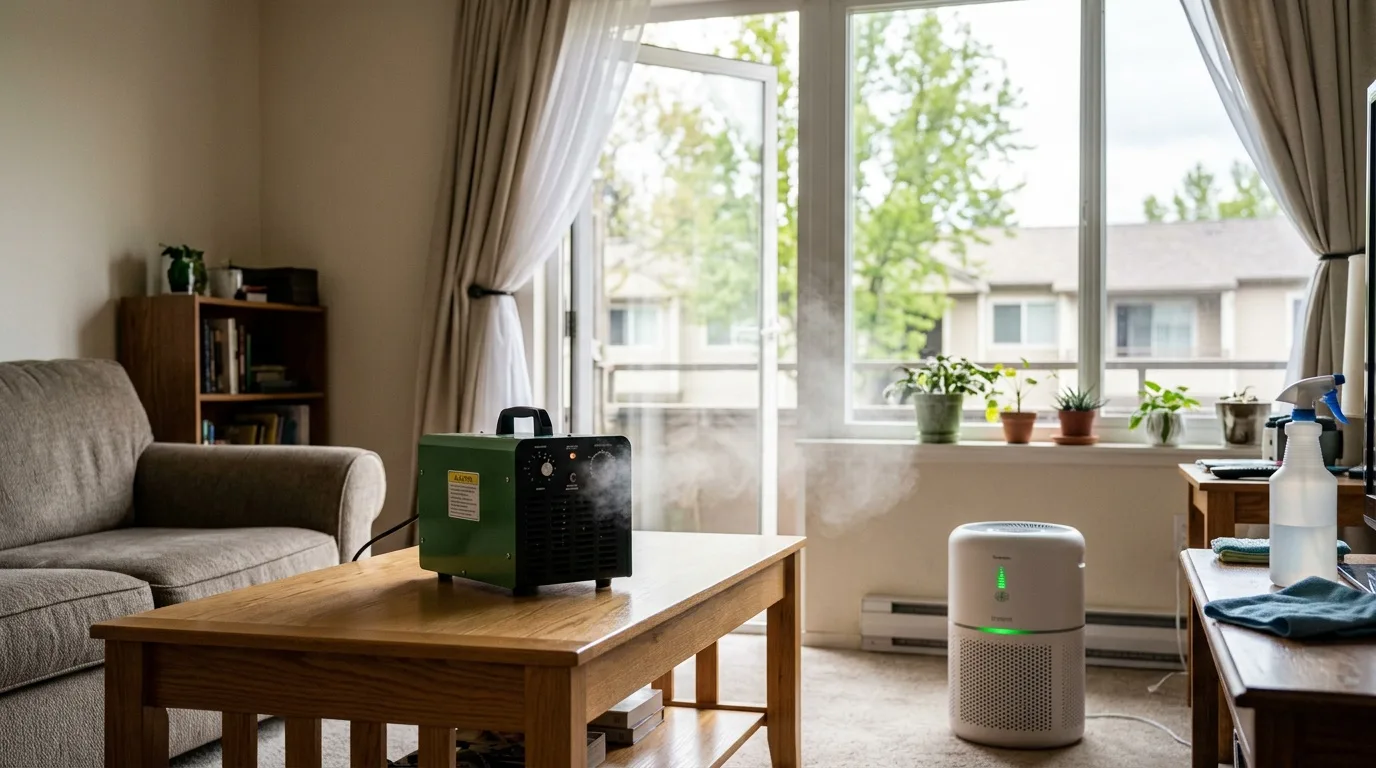
Ozone treatment is a more aggressive approach. The technology destroys any living organisms and breaks the molecular bonds of the compounds that cause odors, including the smell of smoke, soot, and tobacco. Ozone is a toxic gas, so the procedure must be carried out only by trained professionals. Before ozone treatment, all houseplants, terrariums, and pets must be removed from the apartment.
Industrial ozone generators saturate the air with active molecules that penetrate fabrics, furniture upholstery, walls, and even ventilation ducts. Depending on the severity of the damage, a single session may take anywhere from one hour to a full day. After treatment, up to ninety-nine percent of odor-causing microorganisms are neutralized without leaving any chemical residue harmful to the environment.
Cleaning the ventilation system
One detail that Spring Valley residents often overlook is the HVAC system itself. Smoke particles settle inside air ducts, on return-air grilles, and in the filter media. Even if every visible surface in the apartment has been scrubbed, the system will keep recirculating the smell every time the fan kicks on. Replacing the air filter is the minimum step. In more serious cases the ductwork should be professionally cleaned and, ideally, ozone-treated as a separate pass. Apartments in nearby Lemon Grove need the same duct check.
Safety during cleanup
It is worth remembering that cleaning an apartment after a fire is not without health risks. All work involving surface treatment should be done in protective gear — a proper respirator mask and gloves — because breathing in combustion byproducts and direct contact with soot and ash can negatively affect your health. When using ammonia or concentrated vinegar, keep the room ventilated and take breaks outdoors.
When airing and wet cleaning still leave the apartment smelling of smoke, the deeper treatment is crew work — see smoke and fire restoration in Spring Valley, or homes in nearby Chula Vista to the south.
Practical summary
- Locate the source of the smoke and make the area safe.
- Open every window and door for cross-ventilation; use fans or the HVAC fan-only mode to move air.
- Raise humidity with boiling water, wet towels, or a humidifier — add vinegar or lemon to the water for extra odor absorption.
- Perform a full wet cleaning of all surfaces, furniture, and textiles using a vinegar-ammonia solution.
- Sprinkle absorbents such as baking soda or activated charcoal on upholstery and carpets; vacuum after several hours.
- For persistent smoke odor after a fire, bring in professionals for ozone treatment or dry fog application.
- Replace the HVAC filter and have ductwork inspected.
- Always wear respiratory protection and gloves when handling soot and cleaning chemicals.