

Why you should not put off restoring belongings after a fire
After a fire in a home, nobody wants to think about cleanup. But the longer soot and combustion residues sit on surfaces, the harder they become to remove. Synthetic resins released during burning penetrate the pores of furniture and finishing materials, and the smell of smoke can linger for up to six months. Simple airing will not solve the problem — you need a clear plan and, in many cases, professional-grade cleaning products.
For Vista homeowners dealing with fire aftermath, the priority is to act within the first 24 to 48 hours. The sooner belongings are assessed and cleaning begins, the higher the chances of saving what matters. Homes in nearby San Marcos face the same 48-hour window.
First steps: clearing and sorting
Start the recovery process gradually. First, remove items that will get in the way of cleaning. Carry out remaining furniture and personal belongings, and shovel out coals and ash. Carefully remove cracked or soot-covered glass from window and door frames — wear heavy-duty rubber gloves for this. Soft furniture, carpets, and curtains that survived the fire should be sent for professional dry cleaning right away. Empty and defrost the refrigerator and freezer.
After the space is cleared, vacuum the soot from walls, floors, and ceilings. If needed, wash the walls with a stiff-bristle brush, a mop, and cleaning agents formulated for fire residue. Wipe the leaves of any surviving houseplants on both sides. Chrome-plated surfaces should be wiped down and coated with a thin protective layer of vaseline or mineral oil.
What to keep and what to discard
Food products, cosmetics, medications, and children's items that were in the affected area are generally not salvageable and should be disposed of. Clothing, bedding, and other textiles can often be saved through appropriate dry cleaning and disinfection — but if the fabric is charred or structurally compromised, it is better to let it go. Electronics should not be plugged in until inspected by a qualified technician: moisture and soot residue can cause short circuits, and smoke deposits accelerate corrosion of internal components.
Documents, books, and photographs damaged by water and soot can sometimes be partially saved. Gently shake off the ash and consult an archivist or restoration specialist. Freezing damp papers is a well-known technique that prevents mold growth until professional drying and restoration can be done.
Assessing damage to upholstered furniture
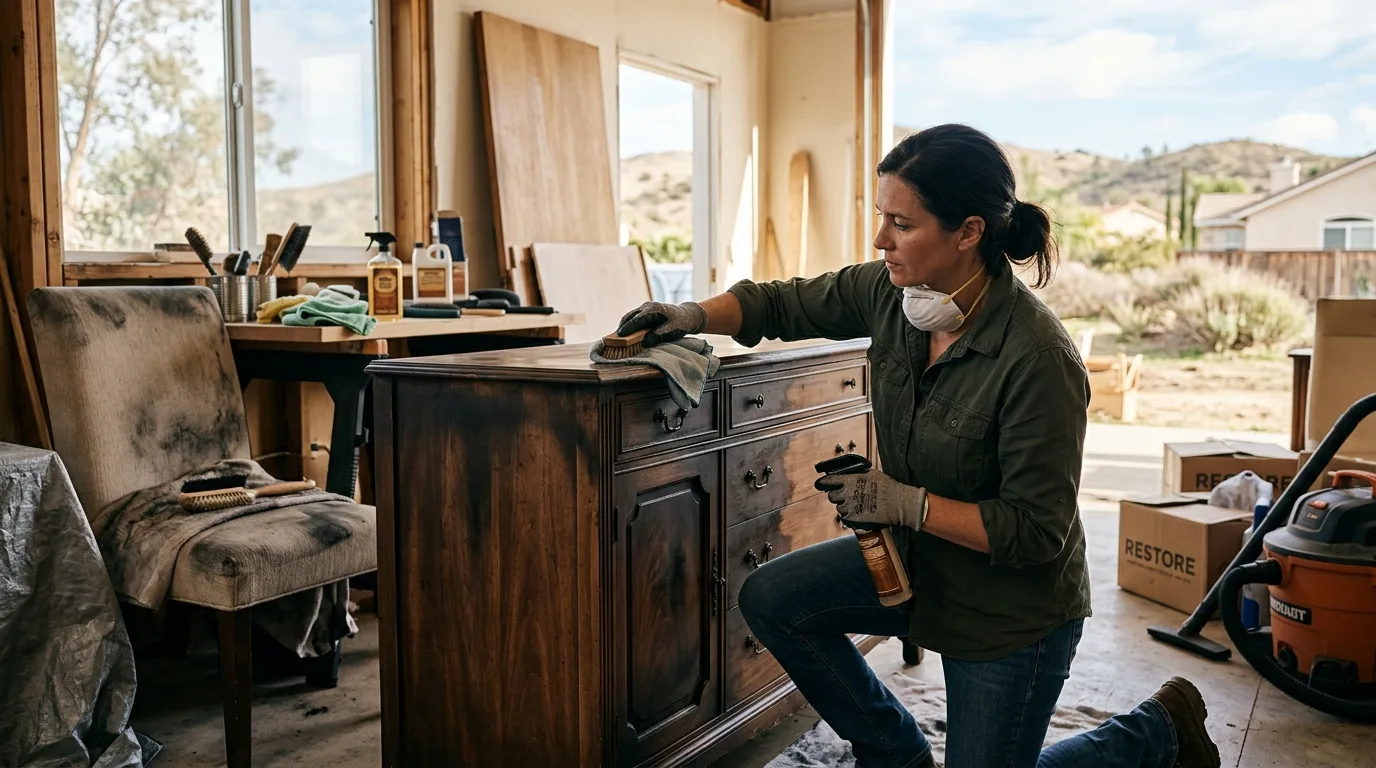
After a fire, upholstered furniture often becomes one of the main casualties — even when the flames never touched it directly. Smoke, soot, and the distinctive smell of burning penetrate deep into the upholstery and filling, creating a serious problem for homeowners. Restoring furniture after such incidents demands a specific approach and knowledge of specialized cleaning methods.
Before starting any cleaning, it is important to correctly assess the extent of the damage. There are three main types of impact to consider: mechanical damage from high temperatures, chemical effects from combustion byproducts, and absorption of the smoke odor. Inspect each piece of furniture carefully, paying attention to:
- Visible traces of soot and char
- Discoloration of the upholstery
- How deeply the smell has penetrated
- The structural integrity of the fabric and filling
It is worth understanding that furniture cannot always be fully restored with household methods alone. Heavily damaged items may require professional help or even a complete reupholstering. We see the same range of damage in fire-damaged homes in Oceanside.
Effective cleaning methods for upholstered furniture
There are several proven approaches to removing the aftermath of a fire from furniture:
Dry brushing — quick results with readily available tools, but it only works for surface-level contamination. Use a soft brush or a vacuum cleaner with an upholstery attachment and go over the entire surface thoroughly.
Chemical cleaning — achieves deep cleaning and is effective against embedded soot, but requires professional-grade products. This method penetrates all layers of the upholstery fabric.
Steam treatment — destroys odors and provides disinfection, though it is not suitable for all fabric types. Before using a steam cleaner, always test the material's reaction on a hidden spot.
Ozone treatment — eliminates stubborn smells without the use of chemicals, but requires specialized equipment. Ozone generators break down odor-causing molecules at the molecular level.
Each method has its own indications and limitations, so the choice depends on the specific situation and the type of furniture involved.
Step-by-step guide to cleaning furniture yourself
For lighter cases of contamination, you can try handling the job on your own:
- Preparation — clear the room of dust and debris, cover the floor with a protective film or drop cloth.
- Dry cleaning — use a soft brush or a vacuum with an upholstery nozzle and go over the entire surface carefully.
- Prepare a cleaning solution — mix warm water with a mild detergent (it is best to use products specifically designed for upholstery cleaning).
- Surface treatment — apply the solution to a small area first, then gently scrub with a soft sponge.
- Drying — blot the moisture with a clean cloth and allow the furniture to dry at room temperature.
An important point: do not use aggressive chemical substances that could damage the upholstery. And always test any cleaning product on an inconspicuous area first.
Handling clothing and textiles
Getting fire-damaged textiles to a professional cleaner quickly is one of the most important factors in successful recovery. Fabrics exposed to smoke are often simultaneously saturated with soot particles and damp from firefighting water. The moisture causes shrinkage and color changes, and wet materials are prone to bacterial growth — so speed matters.
For machine-washable items, start by rinsing them outdoors with a hose to knock off loose soot and ash particles. You can also lightly scrub the fabric with a brush and detergent. Soak the clothing in water with a small amount of laundry detergent to dissolve embedded smoke residues, then wash at the maximum temperature permitted for that fabric.
Delicate items — silk, wool, certain synthetics — should be taken to a dry cleaner. Do not attempt to mask the smoke odor with cologne or air fresheners; this only provides a temporary fix and may hide a deeper problem. If several washes have not eliminated the smell, professional cleaning is the way to go.
Common mistakes during restoration
In the process of restoring belongings after a fire, people frequently make these errors:
- Using water that is too hot, which can damage fabric fibers
- Applying household chemicals that are not designed for fire residue removal
- Over-wetting upholstery, which leads to mold growth inside the cushions
- Improper drying that causes warping and deformation of wooden elements
To avoid these mistakes, follow the manufacturer's care recommendations for each item and use only products that are appropriate for the material in question.
Eliminating the smoke odor
The smell of smoke after a fire embeds itself deeply into surfaces. Synthetic resins from burned materials get into the pores of furniture and finishes, and the odor can persist for up to six months — regular ventilation alone will not resolve it.
To remove the smell, use specialized deodorizing products. Treat everything that survived: walls, floors, ceilings, furniture, carpets, appliances, clothing, and shoes. Follow the label instructions carefully and observe all safety precautions. If the smell returns after cleaning, it may be necessary to repeat the entire process.
For persistent odors, professional ozone treatment is often the most effective solution. Ozone generators produce ozone molecules that break down odor-causing compounds at the molecular level, reaching areas that manual cleaning cannot.
When to call a professional
For Vista homeowners dealing with significant fire damage, there are clear situations when professional help is not optional. Heavily sooted furniture with deep odor penetration, antique or valuable pieces, and large volumes of damaged textiles all call for specialized equipment and expertise that go beyond what household methods can deliver. Restoration professionals can also handle the assessment and documentation that may be needed for insurance claims.
When a whole houseful of furniture, clothing and keepsakes needs cleaning or storage after a fire, our crew can handle it — here in Vista, in homes in nearby Carlsbad, and across all service areas.