

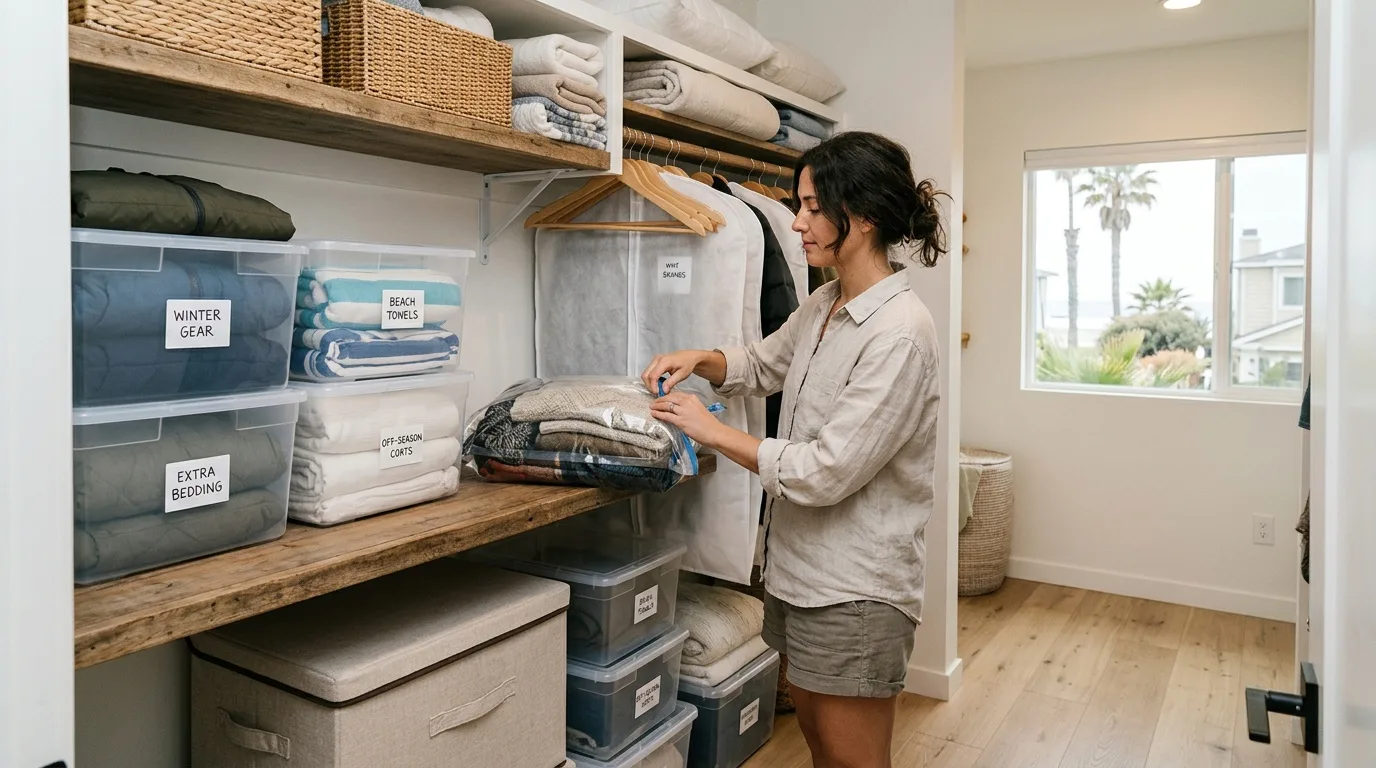
Why Seasonal Storage Matters Even in a Mild Climate
It is easy to forget about seasonal wardrobe rotation when you live in Pacific Beach. The weather stays comfortable most of the year, so winter coats, heavy sweaters and thick blankets pile up in closets without much thought. But even in Southern California, storing off-season clothes and textiles the right way keeps them in good shape and frees up space you actually need. The same rotation helps homes in nearby La Jolla keep closets usable.
Below are practical rules, step-by-step packing instructions and a few honest warnings about what works and what does not when it comes to long-term textile storage.
Start with a Wardrobe Audit
Before you pack anything, take everything out and sort through it. A change of season is a good excuse to get rid of things you no longer wear.
- Check whether you actually wore it. If a jacket or sweater sat untouched for one or two full seasons, it probably does not belong in your closet anymore.
- Try things on. Does it still fit? Does it still look decent? If the answer is no, donate it or recycle it.
- Inspect for damage. Look for torn seams, broken zippers, missing buttons, scuffs on leather or suede. Small defects are worth fixing before storage — larger ones may mean the item is done.
- Check every pocket. Turn them inside out, including interior ones. Forgotten candy wrappers, coins and receipts can stain fabric or cause odor over months of sitting in a closed container.
Preparing Clothes Before Packing
This is a step many people skip, and it is the one that causes the most problems down the line. Anything going into long-term storage must be clean and thoroughly dry.
Washing and Dry Cleaning
Wash jackets and everyday outerwear according to the care label. Use a mild detergent designed for the fabric type — there are specific products for down, membrane and synthetic shells. Wool coats and cashmere pieces are better off at a dry cleaner; home washing risks shrinkage and deformation. Leather and suede items should be treated with a conditioning product to prevent drying and cracking.
Drying
Make sure everything is bone dry. Even slight dampness sealed inside a bag or container leads to mildew, and in a Pacific Beach garage or closet the warmth only speeds that up. Mold will not necessarily form in an airtight environment, but a stale, musty smell will soak into the fabric and stay there for a long time.
Minor Repairs
Sew on loose buttons, mend small holes, fix stuck zippers. Doing this now means the item is ready to wear when you pull it out next season instead of going straight to a tailor.
Choosing Where to Store
The storage spot matters almost as much as the packing method.
Good options
- A closet with decent air circulation — best for items kept in breathable garment bags.
- Upper shelves or the top of a wardrobe — good for boxes and vacuum-packed bundles.
- A dedicated closet or spare room, if you have one.
Bad options
- A balcony or outdoor patio. Temperature swings and humidity will damage fabric over time.
- Regular plastic bags or sealed plastic bins with no ventilation. They trap moisture and create a greenhouse effect inside.
Packing Methods: Garment Bags, Boxes and Vacuum Packs
Breathable Garment Bags and Fabric Containers
Cloth garment bags are the simplest and gentlest option. They keep dust, sunlight and insects away from the fabric while still letting air circulate. Good for coats, blazers, dresses — anything that holds its shape better on a hanger. Fabric storage bins with ventilation work well for folded items like sweaters and jeans.
Cardboard Boxes
A basic and affordable method. Cardboard is a natural material that breathes reasonably well. Line the inside with acid-free tissue paper if you are storing anything delicate.
Vacuum Bags
This is the method that saves the most space. A vacuum bag can reduce the volume of soft items — blankets, pillows, bedding, towels, puffy jackets — by two to three times. They are made of polyethylene, come in different shapes and sizes, and can be reused many times. A good vacuum bag has dense, elastic walls, a tight-sealing valve and a zip-lock closure with multiple sealing strips.
How Vacuum Bags Actually Work: Step by Step
- Make sure the items are clean and completely dry before you put them in.
- Fold the clothes into a neat stack and lay them flat inside the bag on an even surface. Fill the corners.
- Close the zip-lock seal. Run the included clip along the seam a few times to check that it is airtight.
- Remove the cap from the valve, give it a slight twist to open it, and attach the hose of a vacuum cleaner or a hand pump.
- Pump on a low setting. The bag will start compressing visibly.
- Once it stops shrinking, pull out the hose and screw the cap back on tightly.
The whole process takes a couple of minutes per bag.
What You Can and Cannot Store in Vacuum Bags
Vacuum packing is not a universal solution. Some fabrics handle compression well; others do not.
Safe for vacuum storage
- Cotton items — t-shirts, bed sheets, towels.
- Polyester and other synthetics — fleece jackets, athletic wear, synthetic-fill blankets.
- Seasonal children's clothes (mostly cotton and poly blends).
- Guest bedding and spare pillow sets.
Not safe for vacuum storage
- Leather and suede. Compression deforms the material, and the lack of air dries it out.
- Natural fur. Loses its volume permanently.
- Wool coats and cashmere. Develop deep creases that no amount of steaming will remove.
- Down jackets and feather pillows. Extended compression causes the fill to clump and mat together. If you must vacuum-pack a down jacket made of synthetic fill, pump out only about half the air and unpack it seven to ten days before you plan to wear it so it can loft back up.
Five Rules for Storing Clothes in Vacuum Bags
1. Clean and Dry Only
Never pack dirty or damp items. An airtight bag will not breed mold on its own, but trapped moisture will produce a stale, unpleasant smell that embeds itself in the fibers.
2. Sort by Season and Purpose
Pack winter items together, summer items together, children's clothes separately from adult clothes. Guest bedding can go in its own bag. This saves you from tearing open every bag to find the one thing you need.
3. Match Bag Size to Storage Spot
A 50 × 60 cm bag fits on a shelf or inside a dresser drawer. A 100 × 80 cm bag works in an under-bed drawer or a large wardrobe cubby. Measure your available space before buying bags so the packed bundles actually fit where you intend to put them.
4. Watch the Hardware
Zippers, snaps, buckles and chunky buttons can puncture the bag from inside. Either tuck them into the folds of the garment or cover them with a soft cloth before sealing.
5. Respect the Six-Month Limit
The safe window for keeping textiles sealed in a vacuum bag without airing them out is about six months. After that, natural fabrics start losing their structure — they need to breathe to hold their shape. When the six months are up, open the bag, take the items out, let them air for a day, and repack if needed.
Protecting Stored Clothes from Moths and Moisture
Even inside a sealed bag, it pays to add a layer of protection — especially for items stored in breathable containers or garment bags.
- Natural repellents: cedar balls, dried lavender sachets, orange peel. They discourage moths without leaving a chemical smell on the fabric.
- Synthetic moth deterrents: tablets or sachets designed for closet use. Follow the package directions and replace on schedule.
- Silica gel packets: absorb excess moisture inside boxes and containers. Especially useful in Pacific Beach, where coastal humidity can creep into closets near exterior walls. Older beach cottages in nearby Ocean Beach call for the same care.
A Few Storage Habits Worth Keeping
- Label every box, bin and garment bag. A strip of masking tape with a marker note — "winter sweaters" or "guest sheets" — saves time later.
- Store things by category or by family member so you know exactly which container to grab.
- Air out stored items every three to six months. Open the bag or box, shake the clothes out, hang them for a few hours if possible, then repack.
- Move off-season items to harder-to-reach spots — upper shelves, high closet rods — and keep everyday clothes at arm level.
- When stacking folded knits, put the heaviest pieces on the bottom and the lightest on top to avoid crushing.
Wrapping Up
Proper preparation and a sensible choice of packing method are really all it takes. Wash everything, dry it completely, sort it, pack it in the right container for the fabric type and check on it every few months. The clothes stay clean, hold their shape and are ready to wear when you need them — even if that next season is a year away.
If a leak has already reached the closets, start with checking for hidden moisture in your Pacific Beach home; the pack-out and storage service can take the wardrobe out while the house dries.