

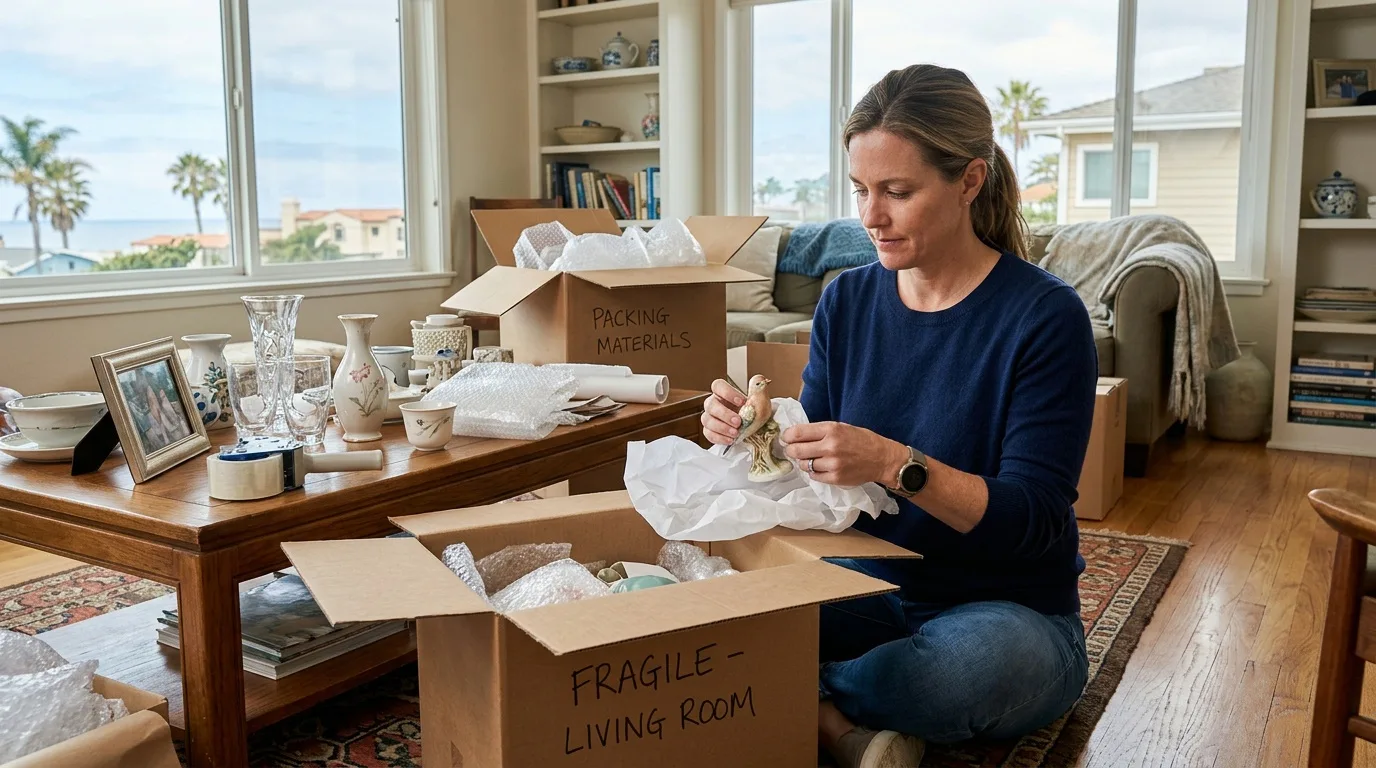
Why packing fragile items matters before emergency repairs
Emergency home repairs are always a difficult process, especially when it comes to protecting fragile belongings. Improper packing of such items can lead to damage or total loss, which in turn brings financial costs and emotional stress. Packing fragile items well requires attention and knowledge of methods that minimize risks.
Every fragile item has its own characteristics and calls for an individual approach. For example, glassware and electronics need very different kinds of protection. That is why it is important to prepare properly for the packing process, select suitable materials, and follow practical recommendations.
In this article we will look in detail at how to pack fragile belongings before emergency home repairs in Carlsbad. We will share tested tips that will help preserve the integrity and safety of your valuable items — from gathering the necessary materials to safe transport and storage while repairs are underway.
Preparation: sorting and supplies
Successful packing of fragile items starts with thorough preparation. The first step is creating a detailed list of all items that need special attention. This helps estimate the scope of work ahead.
Before packing, sort your belongings so you are not hauling unnecessary or broken things. Clean dishes, wipe down surfaces, and unplug and dry any appliances. Remove shelves, glass elements, and protruding hardware from furniture. Fix doors and drawers in place, and put fasteners into labeled bags.
For packing fragile items you will need specialized materials, each serving its own important function:
- Bubble wrap — an indispensable tool for protecting glass and porcelain. It absorbs impacts and prevents cracks.
- Packing paper and kraft paper — good for wrapping surfaces prone to scratches and for separating individual items. Also useful for filling small gaps.
- Foam inserts and protective corners — used to fill voids in boxes and prevent items from shifting. Corners are particularly useful for mirrors and framed art.
- Stretch film — fixes cabinet doors and individual furniture parts, protects upholstery from dust. Lacquered surfaces should first be covered with paper or a soft material before applying the film.
- Packing tape — needed to reinforce the bottom, top, and seams of boxes.
- Markers — for labeling boxes with fragile contents.
Preparation for packing is not simply gathering materials. It means creating conditions under which your fragile belongings will be protected at every stage of the process.
Core principles of packing fragile items
Proper packing of fragile belongings is a craft that demands attention to detail and adherence to certain rules. The basic principles below will help protect your valuables and reduce the risk of damage during Carlsbad emergency repairs. They hold just as true for repairs in Vista homes.
Use quality materials
Wrap each item in several layers of bubble wrap. This provides cushioning against impacts and drops. Before using the wrap, first cover the item in packing paper — this adds an extra layer of protection. Place foam inserts in boxes to hold items in place, and use protective corners for paintings and mirrors.
Fill every void
Place foam peanuts or crumpled paper in the box around wrapped items. This prevents them from shifting inside. Soft cloths or towels work as additional filler and provide extra cushioning.
Label your boxes
Mark each box clearly with the word "Fragile." Indicate what items are inside so that anyone moving boxes knows how to handle them. Label at least two sides of the box — a label only on top becomes invisible once boxes are stacked.
Distribute weight properly
Place heavier items on the bottom of the box and lighter ones on top. Use smaller boxes for heavy objects to avoid excessive load. Do not fill boxes until the lid bulges — a deformed lid cannot bear weight evenly during stacking. An underfilled box is also risky because its walls crush more easily. Fill remaining space with cushioning material.
Seal boxes securely
Tape boxes along all seams with strong packing tape. Reinforce the bottom of heavy boxes with a cross of tape and an extra strip along the center seam. Make sure all packing materials fit tightly together and leave no gaps.
Test for movement
After packing, gently shake the box. If you hear movement inside, add more filler to hold everything in place. There should be no rattling or shifting at all.
Packing different types of fragile items
Different fragile items require an individual approach to protection, since each type has unique vulnerabilities. Below are methods for the main categories of fragile belongings.
Dishes, glasses, and stemware
Wrap each plate, cup, or vase individually in paper, then in bubble wrap. Cover the bottom of the box with a cushioning layer. Place plates vertically — in this position the load is distributed more safely. Stand glasses and mugs tightly but without pressing against each other. Fill voids with paper, wrap, or a dedicated filler to pack everything compactly and securely.
Mirrors and glass panels
Use special corners for mirrors and glass panels. Wrap the item in thick packing paper, then in bubble wrap. Place it in a sturdy cardboard box designed for large flat objects, filling voids with foam. Edges and corners get extra reinforcement with cardboard corner guards. Large glass should be transported upright with secure bracing.
Large electronics — TVs, monitors
Before packing, unplug the device, clean it, and let it dry. Remove any detachable parts, shelves, and containers and pack them separately. Coil cords without sharp bends and secure with a soft tie.
The best option for a TV, monitor, or computer is the original packaging with its built-in inserts. If the original box is gone, wrap the device in foam sheeting or bubble wrap and place it in a sturdy box. Cover the screen with a sheet of corrugated cardboard for added protection. Never stack heavy boxes on top of electronics.
Small electronics and accessories
Wrap each item in bubble wrap. Place small devices in individual small boxes, then into one larger box filled with foam or soft cloths.
Paintings and framed art
Use protective corners and thick packing paper to wrap each painting. Then wrap in bubble wrap. Place paintings in specialized cardboard boxes meant for flat items.
Figurines and decorative pieces
Wrap each figurine in several layers of bubble wrap. Place them in small boxes, filling voids with foam or crumpled paper. Then put those small boxes into a larger box, also filled with protective material.
Lamps and lighting
Disassemble lamps where possible and wrap each part in bubble wrap. Place the parts in separate boxes filled with foam or soft cloths. Pack bulbs separately in their own boxes with foam.
Where to store packed items during repairs
When emergency repairs hit a Carlsbad home, a major question is where to put packed belongings while the work is done. Several options exist:
- A separate room. If the repair affects only one part of the house, you can temporarily move packed boxes into another room. This works only for smaller-scale repairs.
- Garage. Homeowners with a garage can store packed belongings there. The advantage is that items can stay as long as needed and will not be in anyone's way. The downside is temperature swings: in an unheated garage, items may gather moisture. Upholstered furniture absorbs odors, so avoid storing it near chemicals or fuels.
- Self-storage units. Renting a climate-controlled storage unit is a reliable option for larger quantities of fragile items. You have access to the unit when needed, it locks securely, and conditions stay stable year-round — dry, clean, and safe.
- Friends or family. If you can arrange it, having someone hold your boxes temporarily is a safe and cost-effective solution, especially for smaller loads.
Regardless of where you store your belongings, make sure the location is safe from theft, protected from weather, and that items remain shielded from dust and debris that are unavoidable during repair work. The same options exist for homes in nearby Oceanside facing repairs.
Practical tips for a smoother process
- Assign a number to each box and record its contents in a phone note or spreadsheet. This is especially useful if items will be stored off-site for a while.
- Do not use plastic bags or sacks for transporting fragile items — they offer zero impact protection.
- Keep tape only on the outside of wrapping to avoid leaving adhesive residue on surfaces.
- If the original manufacturer box is available for any electronic device, use it — the internal inserts were designed for that exact shape.
- Pack a separate bag with essentials you will need during the repair period: documents, medications, chargers, toiletries, and a change of clothes.
- Before loading packed boxes, check every closet, shelf, bathroom cabinet, and kitchen drawer one last time.
Each type of fragile item requires a careful and thoughtful approach to packing. By following these recommendations, Carlsbad homeowners can ensure reliable protection for their belongings during emergency home repairs, keeping damage risk to a minimum.
If a leak or a storm is behind the repairs, our crew can pack your fragile items out while water damage restoration in Carlsbad gets underway, and we do the same for homes in Encinitas. For a Carlsbad-only resource, visit waterdamagerepaircarlsbad.com.