

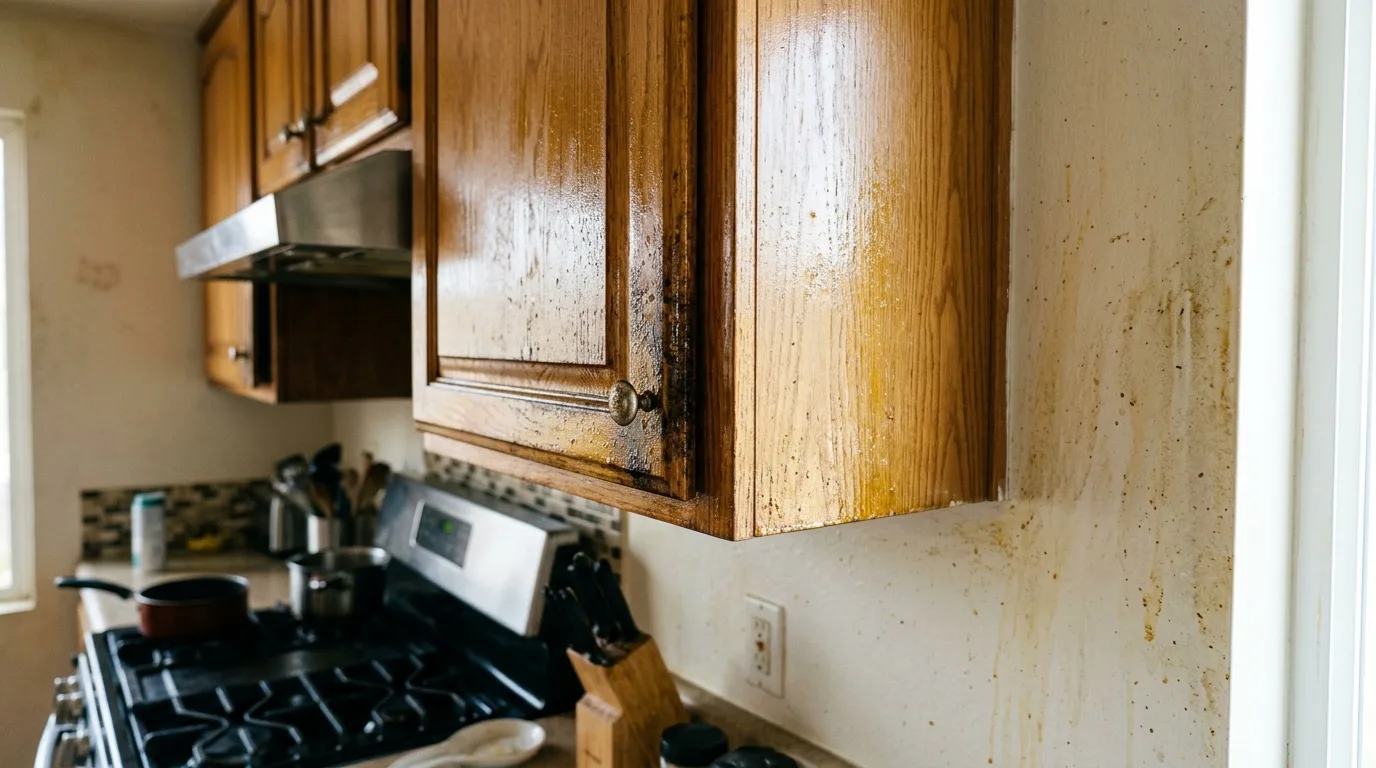
Where does the greasy film come from
Not just countertops, the stove and the oven collect grime in the kitchen. Even with a range hood running, molecules of grease and smoke settle on cabinet fronts, shelves and side panels. The tiniest particles of unburned fats and cooking fumes form a sticky, sometimes glossy film that clings to walls and ceiling surfaces around the stove. Kitchens without adequate ventilation accumulate this residue faster, and in Encinitas—where windows stay open much of the year—dust mixes with the grease layer and makes it harder to remove over time. Coastal kitchens in nearby Carlsbad build up the same film for the same reason.
Before grabbing a sponge it helps to figure out what kind of buildup you are dealing with. A dry, matte coating that flakes off easily usually responds to simple dry cleaning with a vacuum attachment and a soft brush. A shiny, sticky film means grease has bonded to the surface and needs a degreasing treatment. In severe cases—after an actual kitchen fire or heavy smoke damage—professional evaluation is the safer route.
What to know before you start
Before cleaning kitchen cabinets, consider the material of the body and the finish. MDF, laminated particleboard, solid wood, veneer, PVC film, painted surfaces—each reacts differently to moisture, acids and abrasives. An aggressive cleaner can warp or bleach a cabinet front in minutes.
- Choose a gentle tool: a sponge, a soft cloth, microfiber or flannel. Avoid metal brushes—they leave scratches.
- Wear rubber gloves to protect your hands.
- Test any solution on an inconspicuous spot first.
- Keep the room ventilated while you work.
Folk remedies for grease and smoke film on cabinets
Salt solution for everyday maintenance
This will not tackle old, baked-on grease, but regular use keeps kitchens cleaner between deep cleans. Dissolve three tablespoons of salt in about 14 ounces of warm water until the crystals disappear completely. Wipe the surface, then go over it with plain water and dry with a cloth to prevent streaks.
Salt-and-vinegar paste for stubborn stains
Works well on wooden surfaces for old stains from chocolate, berries and sauce—handy if you have kids. Mix salt with vinegar to a porridge-like consistency. Apply locally with an old toothbrush directly onto the stain. Once the spot is clean, wipe away the residue with a damp cloth and dry the surface.
Baking soda, mustard powder and soap
This combination was once the standard in hospital and daycare kitchens because it is gentle and free of allergens. Originally a laundry-bar-soap solution was used, but regular dish soap works too. Lather the surface, sprinkle baking soda over the foam, wait 15–20 minutes and wipe everything off with a sponge rinsed in clean water.
Hydrogen peroxide solution (MDF and particleboard only)
Not recommended on dark-colored fronts—there is a risk of bleaching. Prepare a working solution of one part pharmacy-grade 3 % hydrogen peroxide to two parts water. Spray it onto the greasy area and leave it for 20 minutes. Wipe with a clean damp cloth, then dry.
Lemon juice and baking soda for dusty grease on top of cabinets
Great for washing the tops of upper cabinets where greasy dust collects undisturbed. Juice of one lemon, two cups of water and two tablespoons of baking soda—pour the mix into a spray bottle and apply. The acid and soda release oxygen that lifts grease molecules off the surface. Let it react, then wipe with a dry cloth. Do not use on unfinished wood.
Hot vinegar for old, caked-on grease
You need a 3 % concentration: dilute regular 6 % vinegar with water one-to-one. Soak a cotton cloth in the solution and heat it in the microwave for a few seconds. Use oven mitts to handle the hot cloth. Lay it over the greasy patch and let it sit for several minutes. Works on all surfaces except bare wood.
Ammonia solution
Test on wood before committing. One tablespoon of 10 % pharmacy ammonia per one liter of water. Dampen a cloth, wipe the surface, wait five minutes, then go over it with a clean damp rag and dry. This recipe has been in use since at least the mid-twentieth century.
Vegetable oil and baking soda paste
A method for lacquered and laminated surfaces. One tablespoon of olive or other vegetable oil and one-and-a-half tablespoons of baking soda, mixed into a paste. Apply it right onto the stain and leave until fully dry. Then scrub away the residue with a damp sponge and wipe the front dry. On vertical surfaces, lay a towel underneath—the grease peels off and slides down. Test first on light-colored finishes, as the oil may leave a trace.
Citric acid spray
Not for wood. Dissolve 15 grams of citric acid in one liter of water, add one teaspoon of liquid dish soap. Pour into a spray bottle and mist the dirty area. Let it sit for 40 minutes, then rinse and wipe dry.
Baking powder (for fresh spatters)
Baking powder contains soda, citric acid and starch. Add water to make a thin paste and spread it on a fresh grease spot. After about five minutes, wipe off with a damp cloth and dry.
Dish soap for light grease
Dissolve one tablespoon of dish soap in one cup of hot water. Dip a microfiber cloth, wring it well and wipe the cabinets. For wooden cabinets especially, make sure the cloth is thoroughly wrung out—excess moisture is the enemy of wood.
More cleaning methods worth trying
Rubbing alcohol or vodka
Dilute one tablespoon of rubbing alcohol in one liter of water. Spray onto the surface, leave for 30 minutes, then wipe clean. Works particularly well on glossy fronts. Ventilate the room while working.
Alcohol-and-vinegar combination
Mix white vinegar, rubbing alcohol and vodka in a 2:1:1 ratio, then add a third of a teaspoon of essential oil. Spray the surface, leave 10–15 minutes, wipe with a cloth. The alcohol speeds up grease breakdown while the vinegar tackles the sticky residue.
Mustard powder
Wet the surface, sprinkle the powder on, wipe with a dry cloth, then with a damp one. Good for tile, sinks, stovetops and protected surfaces. Do not use on bare wood or MDF—the powder can leave stains and its sharp smell absorbs into porous material.
Cleaning grease film off kitchen walls
Walls near the stove collect the same greasy smoke film as cabinets, just over a larger area. For painted walls, a vinegar-and-water solution (one part vinegar to three parts water) works well, though it may dull a high-gloss finish. A baking-soda paste handles darker spots—apply it, rub gently with a soft sponge and rinse. For tiled backsplashes, most of the cabinet methods above apply without restrictions; tile tolerates mild acids and soda-based abrasives.
If the walls have been exposed to heavy smoke—from a stovetop flare-up or a small grease fire—start with dry cleaning: vacuum or brush off loose soot before applying any liquid. Wet cleaning on top of dry soot can push the particles deeper into paint or drywall texture and make staining permanent.
Things to keep in mind
- Soda-based pastes are not suitable for glossy finishes, but they do double duty against mold and bacteria.
- Hydrogen peroxide should only be used on MDF and particleboard. It disinfects and fights mildew.
- Do not use a home steam cleaner on cabinet fronts—high temperatures damage PVC film, plastic and paint.
- Melamine sponges work like a fine abrasive; skip them on any delicate or glossy surface.
- Frequent vinegar use requires heavy scrubbing and is not ideal for routine maintenance.
Preventing grease and smoke buildup
Installing and properly maintaining a range hood above the stove is the single most effective step. Keep the hood filter clean—a clogged filter recirculates grease-laden air instead of exhausting it. In Encinitas, where many kitchens open to living areas through wide pass-throughs, grease film can travel further than in a closed-off kitchen layout. The same holds for open-plan homes in neighboring Solana Beach.
Wipe cabinet fronts with a mild soapy cloth once a week. Schedule a deeper clean with one of the methods above once a month. A thorough top-to-bottom scrub every two to three months keeps the film from ever reaching the stubborn, baked-on stage. For additional fragrance and disinfection, add a few drops of eucalyptus, tea tree, rosemary or lavender essential oil to your cleaning solution.
When a grease fire or heavy smoke leaves more film than a sponge can lift, the next step is fire and smoke cleanup in Encinitas, part of our home restoration in Encinitas.